Wholesale snake racks are purchased for different reasons. A breeder may prioritize room capacity and cleaning workflow, while a distributor needs a compact, understandable range with replacement tubs and consistent packaging. A good order plan begins with the buyer's operating model, then works backward to tub sizes, rack configurations, heating, accessories, service parts, and landed cost.
1. Start with the Buyer Type
The same catalogue should not be ordered in the same way by every buyer. Define the operating goal before selecting models.
| Buyer | Primary planning question | Typical order priority |
|---|---|---|
| Professional breeder | How will the system support room workflow and planned animal groups? | Usable tub sizes, capacity, heating, cleaning, expansion, spare tubs |
| Pet store | Which products support back-of-house care and an understandable customer offer? | Compact range, staff usability, labels, replacement parts, display support |
| Distributor | Which models can cover the most demand with controlled inventory? | Range architecture, carton data, stock turns, parts continuity, mixed orders |
| Private-label brand | Which approved changes create differentiation without uncontrolled complexity? | Branding, packaging, specification control, samples, MOQ, documentation |
2. Build a Range, Not a Collection of Random Models
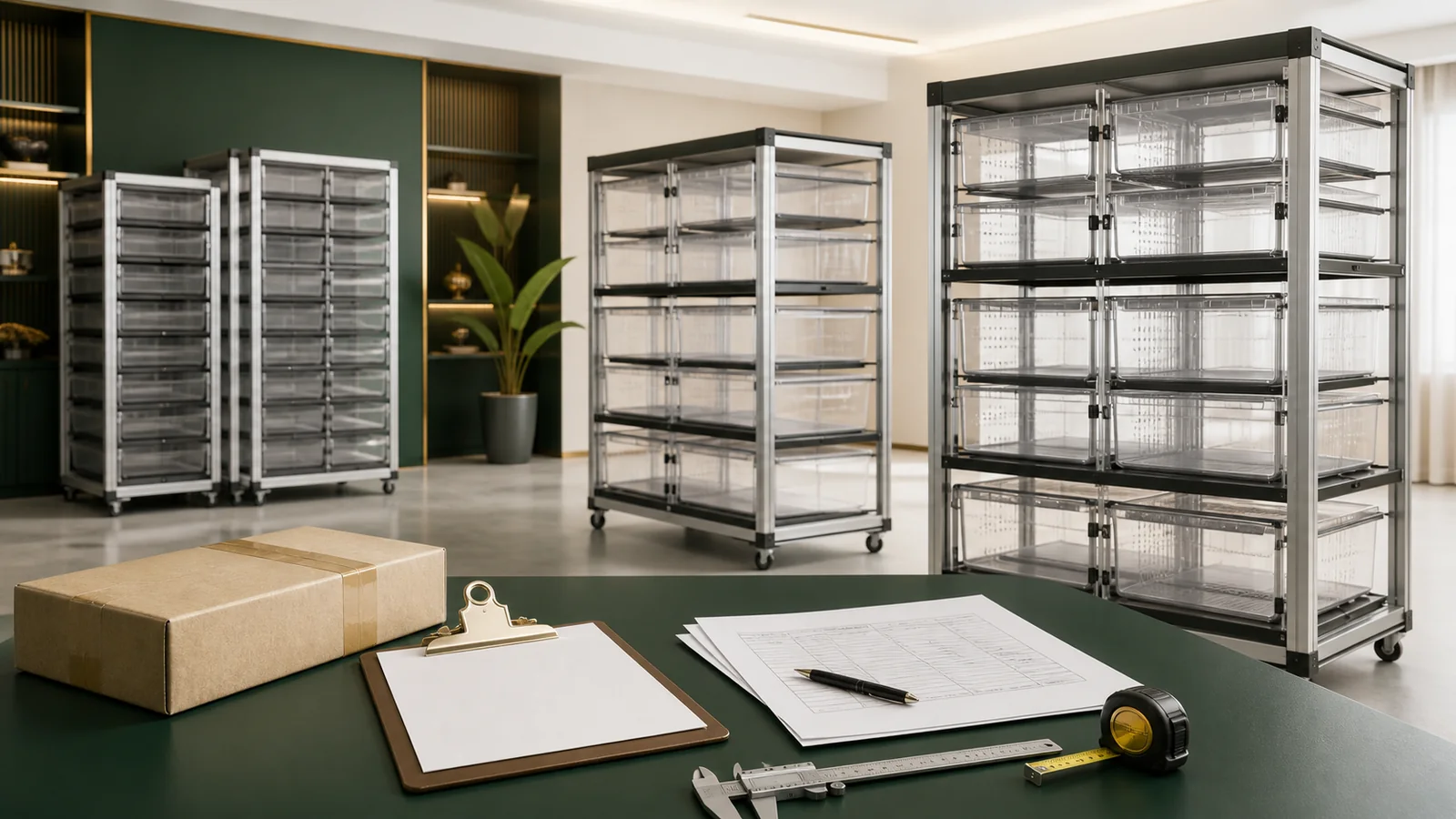
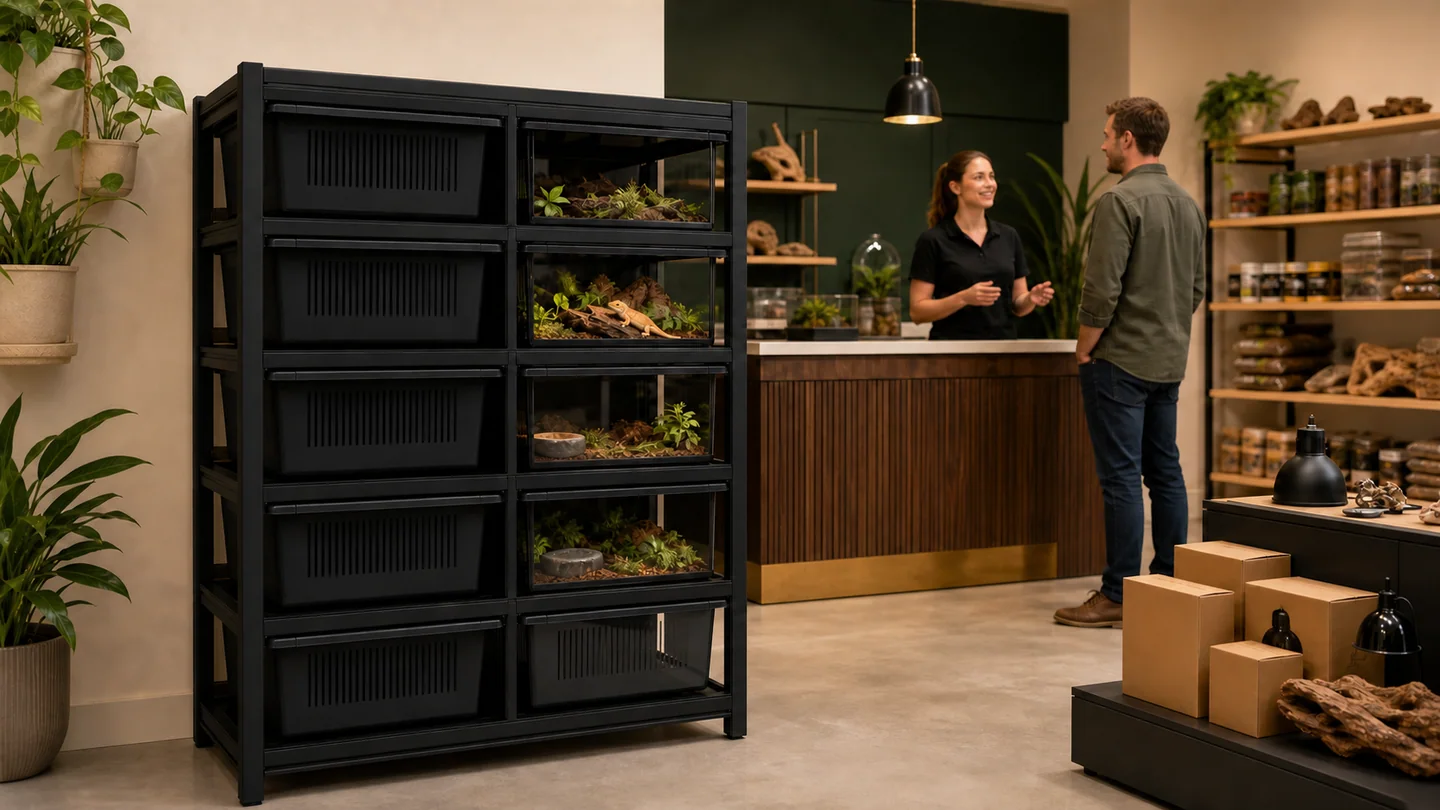
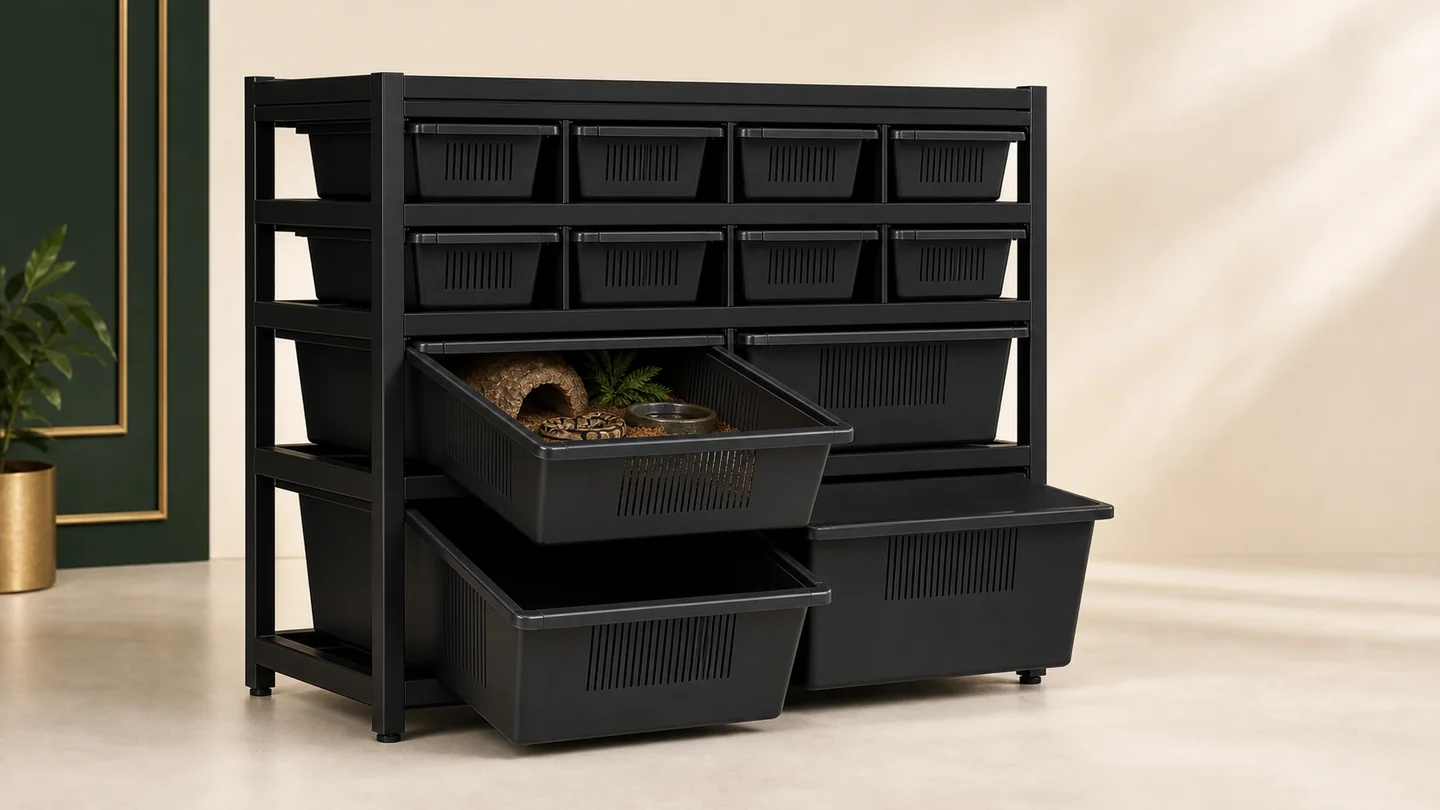
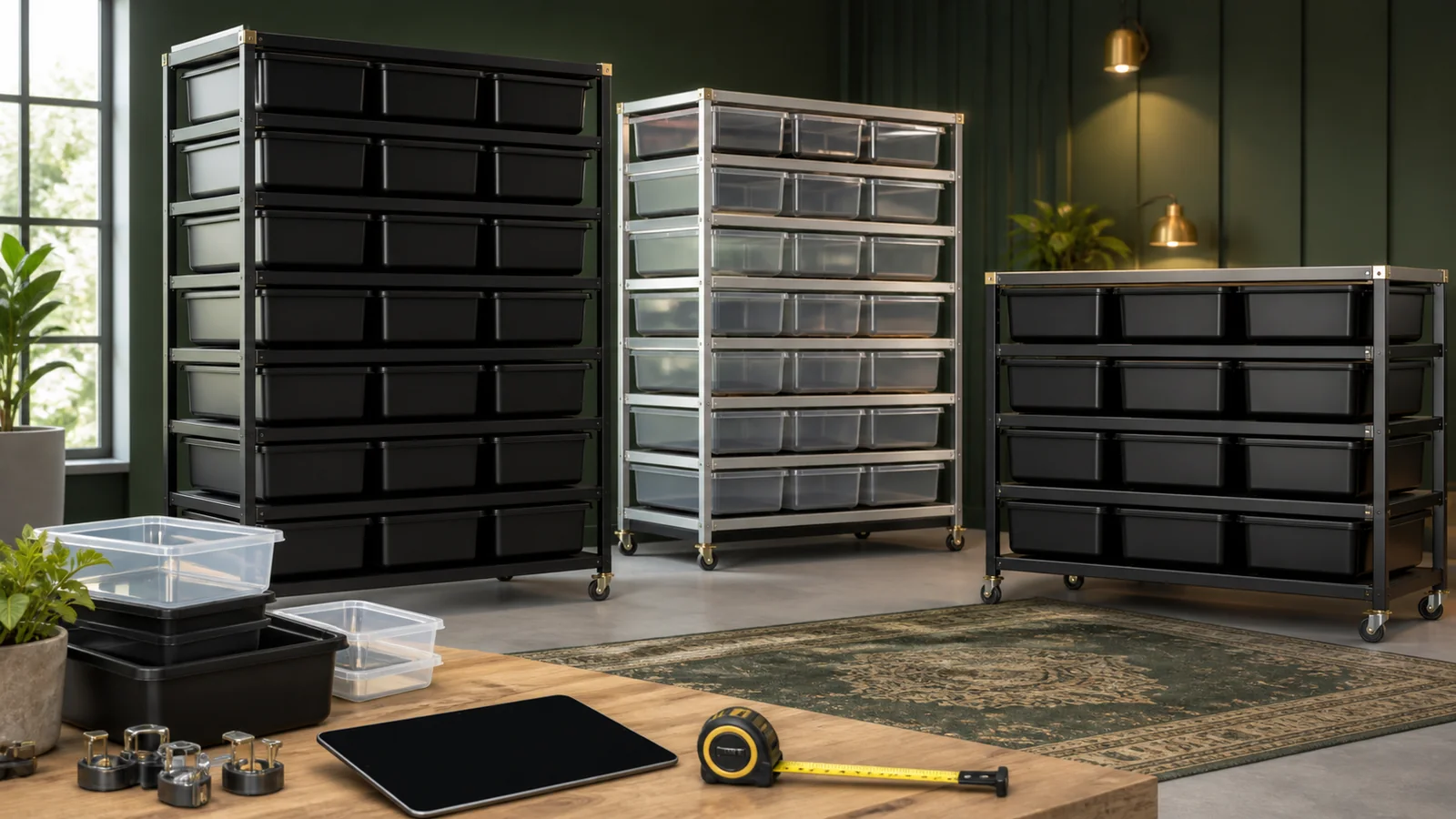
A wholesale range should give each model a clear role. One compact format may serve smaller tubs or limited spaces; a mid-size format may cover the highest-volume use cases; a deeper or wider format may serve larger internal-space requirements; and glass or combination systems can address display-oriented applications.
Too many near-duplicate models create slower stock turns, more packaging references, more spare parts, and harder staff training. Too few models can push buyers toward unsuitable compromises. Ask the supplier to map each proposed model to a distinct use case, tub format, overall footprint, and compatible replacement component.
3. Review Usable Space and Tub Function
External dimensions help with room planning, but usable internal dimensions are essential for housing review. Confirm internal length, width, and height; wall taper; tub-to-frame clearance; ventilation location; access for hides and water; and how the tub moves when loaded.
Plan for life stage and growth rather than relying only on the animal's current size. The final setup should be assessed through observation and records. If the animal cannot use the available space normally, maintain the required thermal conditions, or access furnishings without obstruction, the setup needs to change.
For more detail, use our reptile rack tub size guide as a framework for comparing hatchling, juvenile, and adult requirements.
4. Specify Heating as a Complete System
“With heat” is not a complete specification. Confirm the heating component, its position, voltage, wattage, wiring or plug arrangement, controller compatibility, number of independently controlled zones, and installation responsibility. The order should also define what is included and what the buyer must source locally.
Every commissioned rack needs suitable thermostatic control, correctly positioned probes, independent temperature verification, and a documented response to sensor, controller, or power failure. Destination electrical rules vary, so buyers should confirm local requirements before approving production.
5. Compare Serviceability and Daily Labor
Wholesale buyers often focus on capacity and forget the labor attached to every occupied tub. Evaluate how staff remove and return tubs, access water and hides, identify animals, clean rails and frames, inspect heating components, move the rack, and isolate a damaged component.
Ask which parts can be replaced individually and how long the supplier expects to support spare tubs, hardware, rails, casters, and heating components. Standardizing selected parts across several models can reduce inventory and downtime.
6. Calculate the Complete Landed Cost
Use one worksheet for every offer. The calculation should include:
- Rack frame, tubs, heating, casters, locks, labels, and selected accessories.
- Retail or export packaging, assembly instructions, pallet or crate costs when applicable.
- Inland transport, export handling, international freight, insurance when selected, and destination charges.
- Customs duties and taxes confirmed with a qualified destination professional.
- Inspection, local delivery, assembly labor, and an initial spare-parts allocation.
For resale, calculate gross margin using landed cost rather than the ex-works unit price. Also test the effect of damaged cartons, promotional discounts, marketplace fees, warehouse storage, and slow-moving models.
7. Use a Pilot Order to Test the Range
A pilot order can answer questions that a catalogue cannot. Breeders can test room fit, assembly time, tub movement, cleaning access, and monitoring. Retailers can test customer questions, display space, price acceptance, and demand by model. Distributors can measure carton handling, damage rate, replenishment, and spare-part requests.
Before the pilot begins, define what success means. Useful measures include assembly time, staff handling issues, number of damaged or missing parts, customer inquiries, sell-through by model, and time required to resolve a support case.
8. Approve the Commercial Record
The purchase record should include the final model list, quantities, specification revision, approved sample or reference, packaging, labels, inspection criteria, payment stages, delivery term, change-control process, and claims procedure. If private-label packaging or product changes are included, define ownership and approval responsibility for each artwork and specification.
Review How We Work to see how Stellar Start coordinates these steps with buyers and specialist manufacturing partners.
Wholesale Snake Rack Scorecard
- Every model has a clear buyer and use-case role.
- External and usable internal dimensions are confirmed in writing.
- Tub material, ventilation, color, clearance, and replacement compatibility are recorded.
- Heating, voltage, controls, probes, and commissioning responsibilities are defined.
- Daily handling, cleaning access, repair, and parts continuity have been reviewed.
- MOQ and mixed-model rules match the buyer's stock plan.
- Landed cost and target margin have been calculated by model.
- A sample or pilot order and acceptance criteria are approved.
- Warranty, claims evidence, and remedies are included in the order record.
Frequently Asked Questions
Who buys wholesale snake rack systems?
Typical buyers include professional breeders expanding a facility, pet stores building back-of-house housing, distributors creating a resale range, and private-label brands developing a coordinated product line.
How should a buyer choose tub sizes?
Choose usable internal space and configuration after reviewing the individual animal, life stage, movement, hides and furnishings, ventilation, temperature gradient, cleaning access, and applicable welfare requirements. A rack model is not a universal species recommendation.
What costs belong in the comparison?
Compare the complete landed cost, including the rack, tubs, heating and accessories, packaging, inland transport, export handling, international freight, customs charges, destination fees, inspection, and local delivery.
Can different models be combined in one order?
Mixed-model orders may be available, but the permitted combination, MOQ, production timing, packaging efficiency, and price must be confirmed for the selected products and quantity.
Product planning: Compare the 45-Series, NS Series, A / R Series, and glass and combination systems before building your inquiry list.