Searching for a reptile rack supplier in China can produce dozens of similar photos and very different commercial offers. The safest comparison is not based on one image or one unit price. It is based on a complete specification, an approved sample, a documented quality plan, and written terms for packaging, shipping, replacement parts, and claims.
1. Define What “Supplier” Means for Your Project
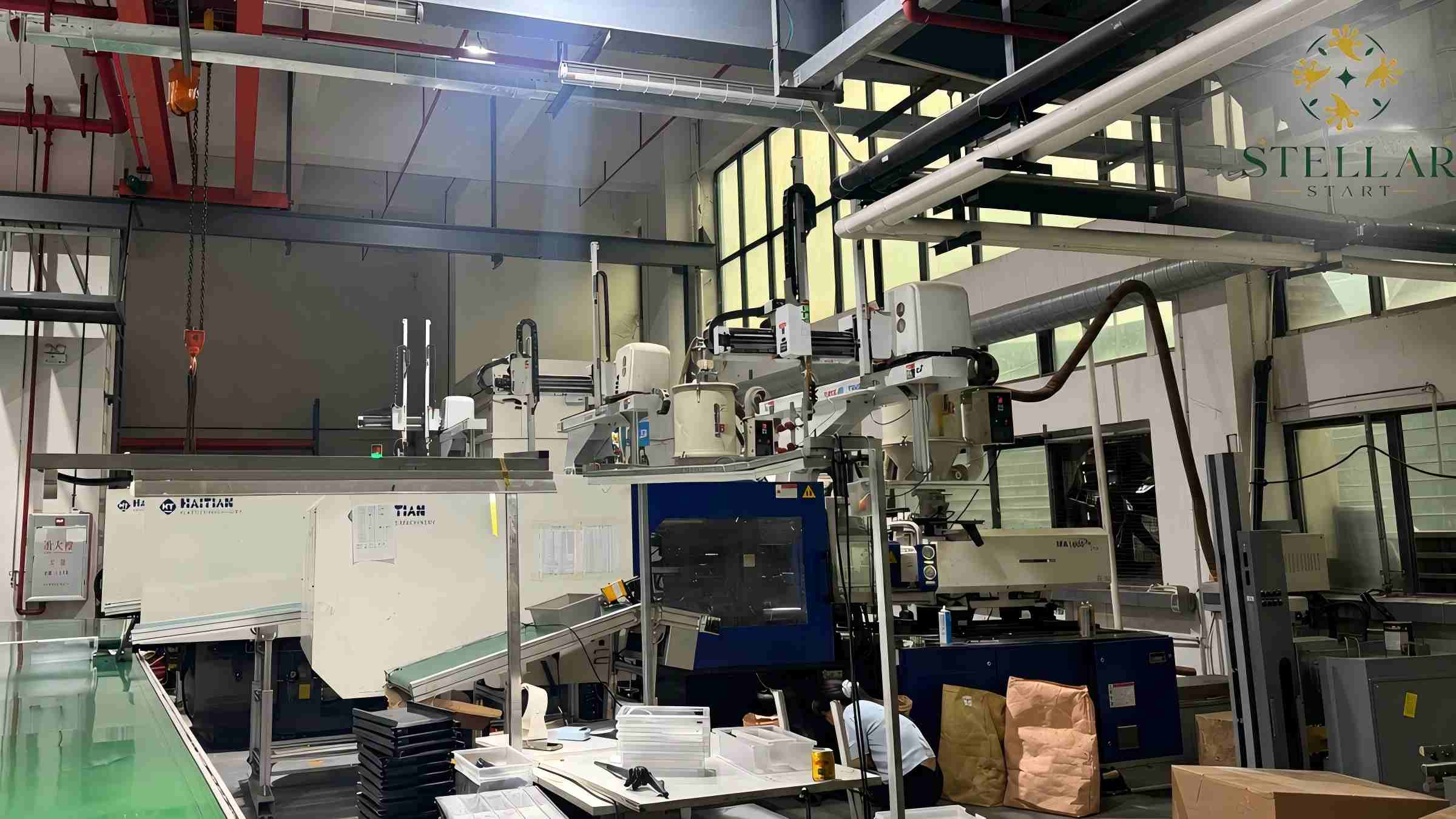
A manufacturer, exporter, sourcing company, brand owner, and distributor can each perform a different role. Before comparing quotations, ask who will be the legal seller, who manufactures the selected product, who controls the specification, who exports the goods, and who handles a claim after delivery.
This distinction matters because a buyer may need more than production. A multi-model order can also require specification consolidation, packaging coordination, inspection, export documentation, freight communication, and replacement-part support. Ask each potential partner to describe its role in writing.
2. Send a Complete RFQ Instead of “Best Price?”
A short request usually produces a provisional price that is difficult to compare. A useful request for quotation should include:
- Buyer profile: breeder, pet store, distributor, importer, or private-label brand.
- Intended use: facility expansion, retail resale, display, quarantine, or a mixed application.
- Configuration: preferred models, tub sizes, number of levels or columns, frame finish, casters, and accessories.
- Heating: whether heating is required, destination voltage, plug or wiring expectations, thermostat plan, and applicable local requirements.
- Commercial details: quantity by model, destination country and postal code, preferred trade term, target delivery window, and packaging requirements.
If you are not sure which model fits, send the available room dimensions, species list, life stages, estimated animal count, and workflow. The supplier can then suggest configurations for review rather than treating a model name as an automatic husbandry recommendation.
3. Compare the Written Product Specification
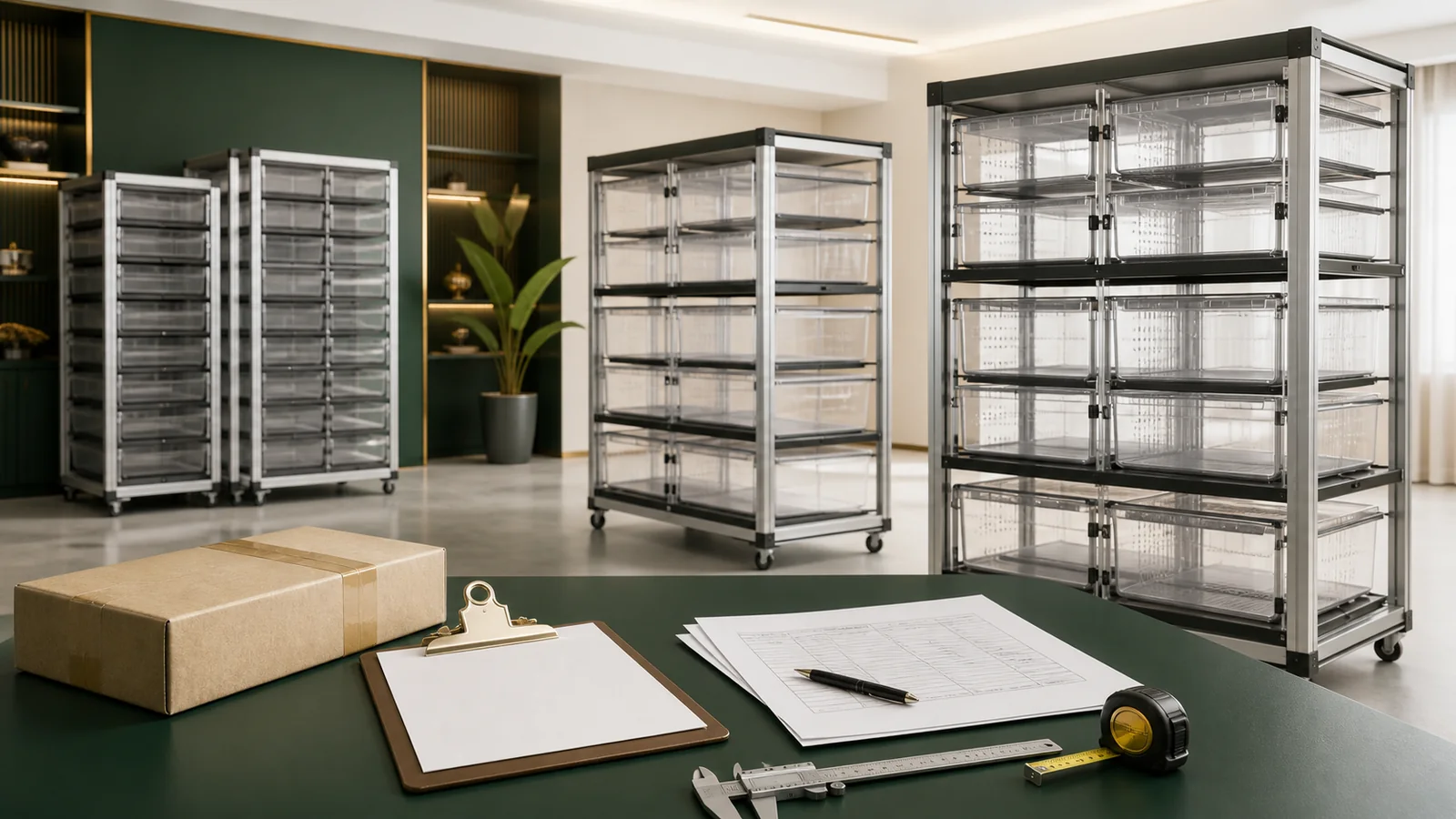
Photographs do not define a wholesale order. Request a model-level specification sheet and confirm which revision applies to the quotation.
| Specification area | What the buyer should confirm | Why it matters |
|---|---|---|
| Overall dimensions | Assembled width, depth, height, required wall clearance, and caster height | Room planning and freight volume |
| Tub dimensions | External and usable internal dimensions, clearance, ventilation, color, and declared material | Animal-space review and replacement compatibility |
| Frame and hardware | Declared material, finish, fasteners, rails, assembly method, and included tools | Durability, serviceability, and installation |
| Heating option | Component type, position, voltage, wattage, controller compatibility, and installation responsibility | Electrical planning and safe commissioning |
| Accessories | Casters, locks, labels, feeding tubs, spare tubs, and replacement components | Accurate unit comparison |
Use the exact same fields when comparing suppliers. A lower quote may exclude casters, heating, cartons, internal packaging, spare parts, or assembly hardware that another quote includes.
4. Approve a Sample and Quality Standard
For a new model or new supplier relationship, an approved sample is the clearest reference. Inspect tub fit and movement, finish consistency, frame alignment, fasteners, stability on the intended floor, ventilation workmanship, packaging protection, labeling, and assembly instructions.
Convert the sample review into measurable acceptance criteria. State which dimensions are critical, what cosmetic variation is acceptable, which accessories must be packed with each unit, and how cartons should be labeled. For a larger order, agree whether verification will happen during production, before packing, after packing, or through a combination of checks.
5. Compare Landed Cost, Not Only Unit Price
The useful commercial comparison is the cost of receiving a saleable, usable product at the destination. Build a landed-cost worksheet that includes product configuration, optional heating, accessories, packaging, inland transport, export handling, international freight, cargo insurance when selected, customs charges, destination fees, inspection, local delivery, and an allowance for replacement parts.
MOQ should also be reviewed at the model and order level. A mixed-model order can be more useful than a large quantity of one size, but mixing may affect packaging efficiency, production scheduling, and unit cost. Ask which combinations are available instead of assuming one MOQ applies to the entire catalogue.
6. Plan Packaging and Shipping Before Production
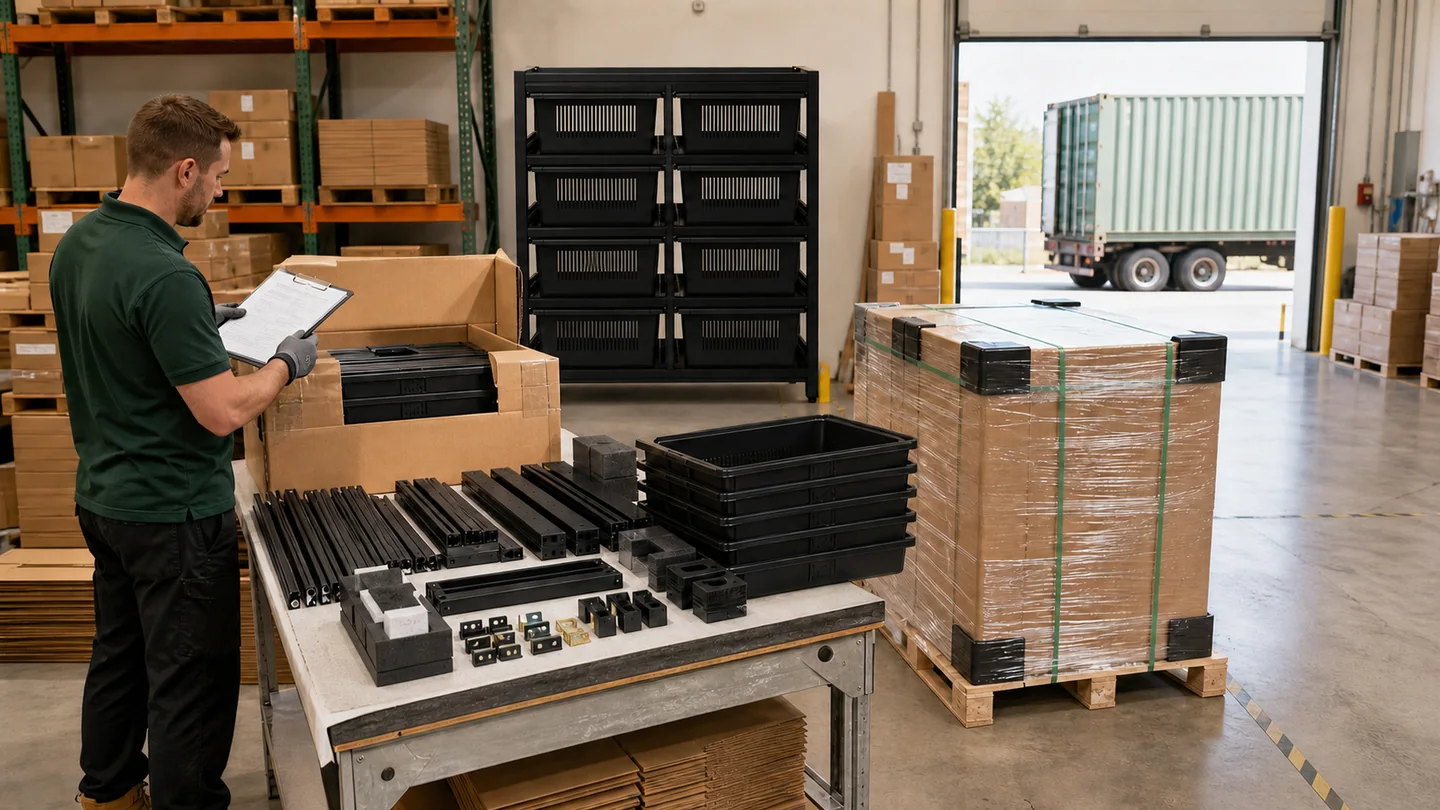
Reptile rack systems are bulky products. Packaging design can affect damage risk, container use, assembly labor, and customer experience. Confirm whether racks ship assembled, partly assembled, or flat-packed; how panels, tubs, heating parts, and hardware are separated; and whether cartons need model, quantity, gross weight, dimensions, or private-label information.
Before shipment, verify the packing list against the approved order and check that replacement hardware, instructions, and model labels are easy to identify. For import decisions, confirm customs classification and destination requirements with a qualified broker in the importing country.
7. Put Warranty and Claims into the Purchase Record
“Warranty available” is not enough. Ask what is covered, the coverage period, exclusions, required evidence, notification deadline, available remedies, and responsibility for international freight or local labor. Electrical components and physical rack parts may have different conditions.
When a problem occurs, useful evidence normally includes the purchase reference, model and quantity, carton or batch identification, clear photos or video, a description of the issue, and the date it was discovered. Review our Warranty & Claims page for the information Stellar Start requests when coordinating a case.
8. Watch for Common Supplier Red Flags
- One price is offered without a model, configuration, quantity, or trade term.
- Product dimensions change between the catalogue, quote, invoice, and packing list.
- Material, electrical, safety, or load claims are made without product-specific support.
- The seller will not explain the manufacturer, exporter, and after-sales roles.
- A large custom order is encouraged before a sample or specification is approved.
- Packaging and replacement parts are discussed only after production is complete.
Reptile Rack Supplier Inquiry Checklist
- Buyer type, intended use, species list, and life stages are documented.
- Model, tub size, quantity, frame finish, casters, heating, and accessories are listed.
- Destination, voltage, preferred trade term, and delivery target are included.
- One product specification and revision are attached to the quotation.
- Sample, quality criteria, inspection stage, and packaging method are agreed.
- Landed-cost inputs, payment stages, and change-control rules are recorded.
- Warranty, evidence requirements, replacement parts, and claims contact are confirmed.
Frequently Asked Questions
What should I send a reptile rack supplier before requesting a quote?
Send the intended use, preferred tub sizes and quantities, rack configuration, frame finish, heating requirements, destination voltage, delivery country, target quantity, packaging needs, and required delivery window.
Should I order a sample before a wholesale order?
A sample or pilot order is strongly recommended when dimensions, fit, finish, heating compatibility, assembly, or packaging have not already been approved for the exact configuration.
Is the lowest unit price the best supplier comparison?
No. Compare the complete written specification and landed cost, including accessories, packaging, inland transport, freight, duties, inspection, replacement parts, and after-sales terms.
What is Stellar Start's role?
Stellar Start is an independent B2B supply and export service company. We coordinate product selection, written specifications, order follow-up, quality verification, logistics, and after-sales communication with specialist manufacturing partners.
Next step: Review our How We Work process and reptile rack product range, then send one consolidated inquiry for a comparable quotation.