The right reptile rack tub size is not chosen from a species name alone. A responsible decision starts with the individual snake, its life stage and behavior, the usable internal space after furnishings, and the welfare rules that apply where the animal is kept.
For breeders and wholesale buyers, tub dimensions also affect rack density, heating layout, cleaning time, shipping volume, and future expansion. That makes sizing both a husbandry decision and a facility-planning decision. The best system is one that lets those two requirements meet without reducing animal welfare to a simple SKU.
1. Start with Usable Internal Space
External tub dimensions tell you whether a container fits the frame. They do not tell you how much space remains after the wall taper, lid or rail, hide, water dish, substrate, and environmental furnishings are installed. For animal-space decisions, ask for:
- internal length, width, and height;
- usable floor area after furnishings;
- clearance between the tub and the rack above;
- location and capacity of ventilation;
- how the heat source reduces or divides usable zones.
A large water bowl or two hides can meaningfully change the remaining space. Mock up the finished enclosure before ordering a full room of one size.
2. Allow Full-Body Extension and Normal Movement
Modern welfare guidance increasingly emphasizes that snakes should be able to stretch out fully and perform normal behaviors. In the United Kingdom, the Animal Welfare Committee has specifically examined space for snakes in pet-selling establishments, while current government standards for professional animal facilities also consider full extension, environmental gradients, and behavioral needs.
Local requirements differ, so buyers should not treat one country's formula as a universal rule. The practical lesson is broader: measure the animal, assess the complete enclosure, and choose for normal use—not the smallest container in which the animal can physically coil.
3. Match Height to Behavior, Not Just Body Length
Floor area is only one dimension. A ground-oriented species may use horizontal space differently from a climbing or semi-arboreal species. If the animal regularly climbs, perches, adopts elevated resting positions, or uses vertical structure, a shallow rack tub may not meet its behavioral needs even when its footprint looks sufficient.
Height also affects substrate depth, hide selection, bowl stability, airflow, and how safely the tub can be opened. Include all of these in the sizing brief.
4. Plan for a Thermal Gradient
A heated enclosure needs enough usable distance for the animal to move between warmer and cooler areas. A tub can be technically large enough by floor area but functionally too short if the heat source influences most of it. Test the complete system with calibrated equipment before animals are introduced.
Document warm-side and cool-side readings, thermostat probe position, room ambient conditions, and seasonal changes. Use a thermostat for controlled heat sources and follow the equipment instructions. Species-specific targets should come from qualified veterinary or husbandry guidance.
5. Use Life Stage as a Review Point, Not a Shortcut
Hatchling, juvenile, and adult labels are useful for inventory planning, but two animals at the same age can differ in length, body condition, behavior, and confidence. A small enclosure is not automatically more secure. Security can also come from correctly sized hides, visual cover, substrate, and careful placement.
Create objective review triggers: measured body length, ability to stretch and turn, use of furnishings, feeding and activity observations, and available thermal zones. Review before the enclosure becomes limiting.
6. Compare Modular Product Families by Planning Role
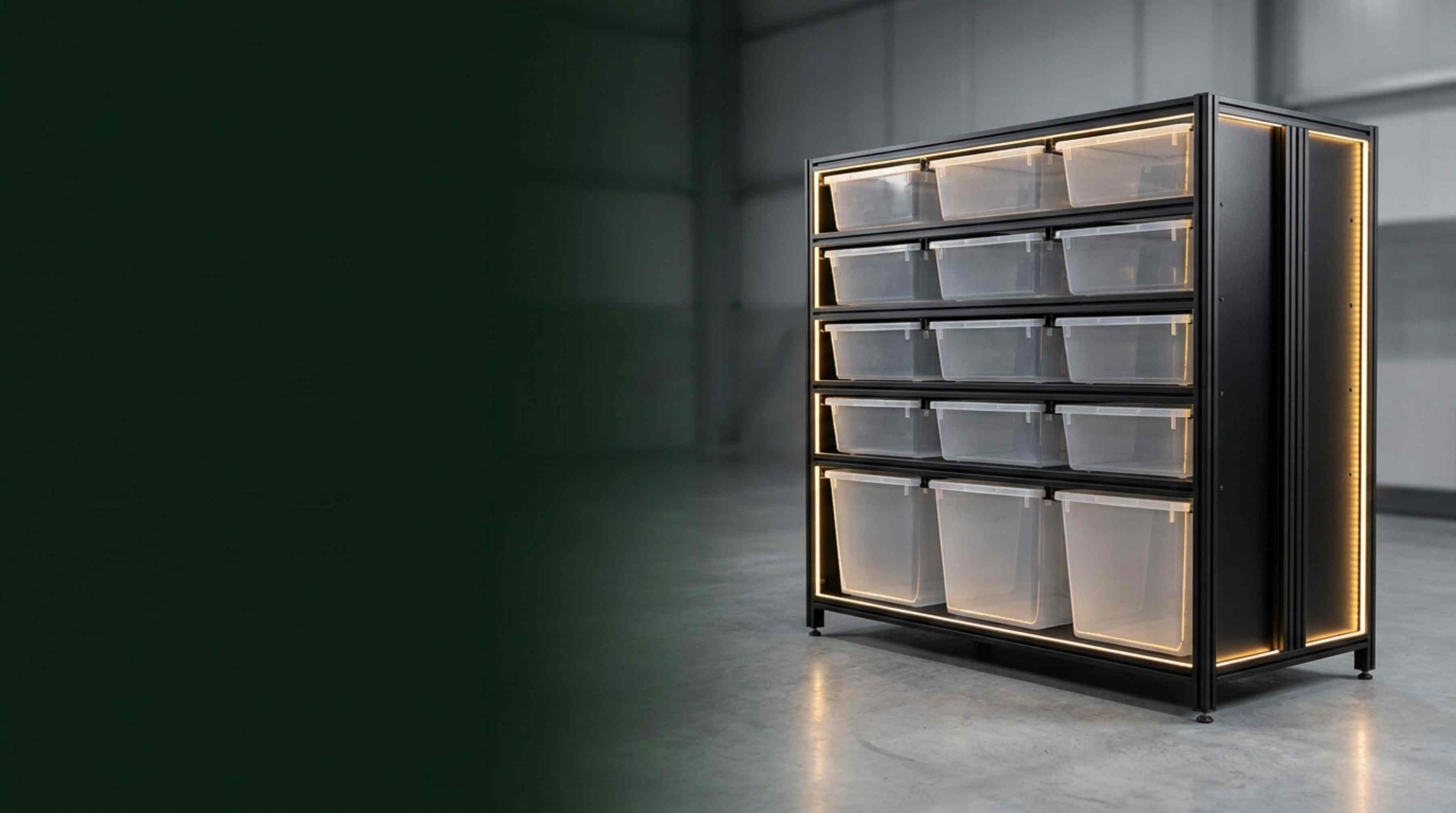
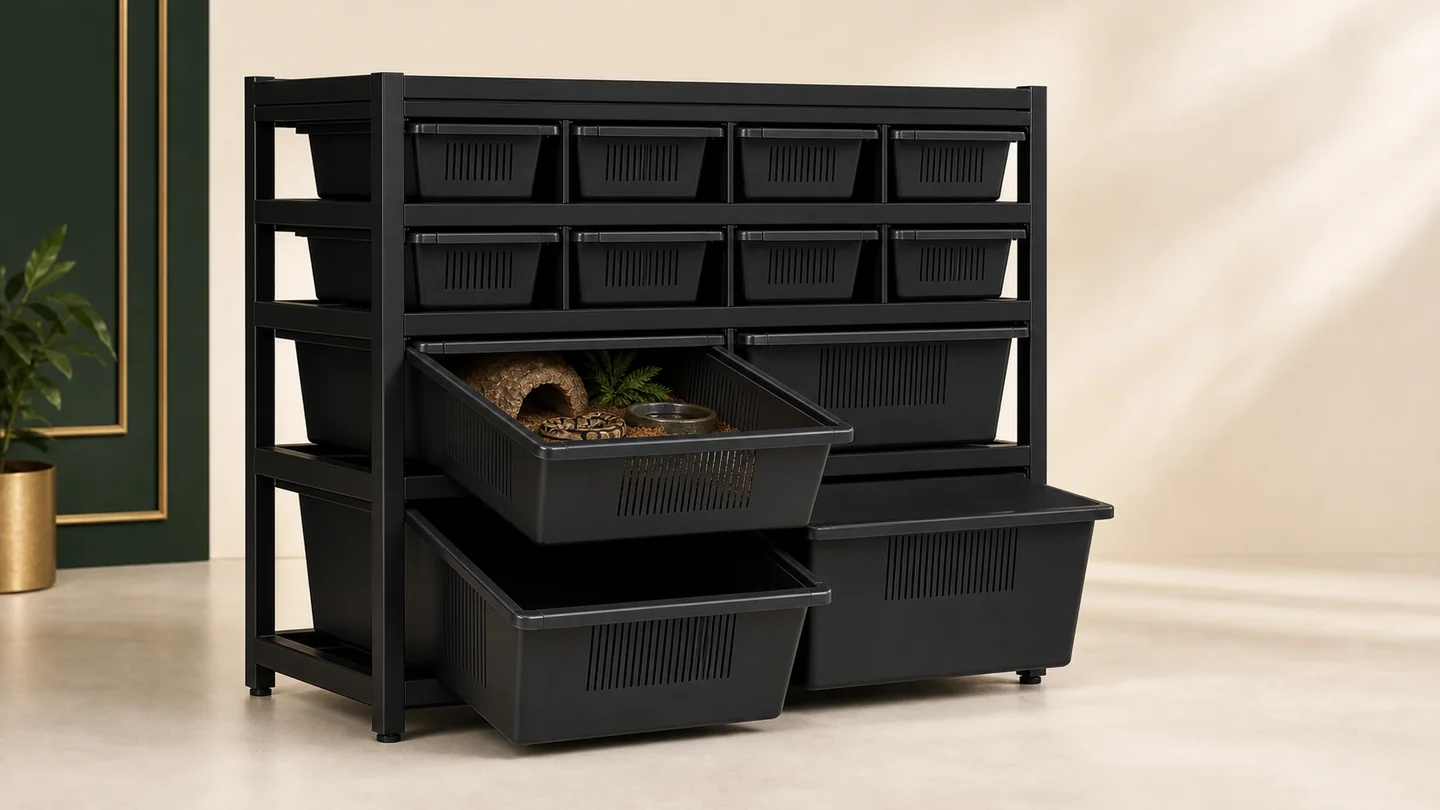
Stellar Start's modular ranges cover multiple footprints. The examples below are product dimensions, not automatic species recommendations. Buyers must validate each setup for the animal and local requirements.
| Product family | Example box sizes | Facility-planning role |
|---|---|---|
| 45-Series | 45 × 15 × 7.7 cm; 45 × 30 × 10 cm; 45 × 60 × 13 cm | A consistent 45 cm module with several widths and depths for staged inventory planning. |
| NS Compact | 30.5 × 14.6 × 7.7 cm; 30.5 × 22.2 × 7.7 cm | Compact formats where the completed setup is demonstrably suitable. |
| NS Large Format | 60 × 30 × 12 cm; 60 × 45 × 12 cm; 90 × 60 × 16 cm | Larger footprints for facilities that need more usable floor area within one coordinated series. |
| Glass & Combo | Multiple terrarium and hybrid formats | Useful when visibility, height, environmental complexity, or customer display is a primary requirement. |
Confirm the latest internal dimensions and component compatibility on the quotation. Product measurements may vary slightly, and a model name should never replace an animal-level fit assessment.
7. Build a Growth Map Before You Buy
A growth map connects animal records to physical capacity. For each planned group, record:
- current number of animals and enclosure size;
- anticipated review dates and next housing option;
- available spaces in the next-size rack or enclosure;
- spare tubs and replacement components;
- heating and thermostat capacity for the expanded layout;
- quarantine capacity that remains separate from the main collection.
This prevents a common facility problem: animals reach the next housing stage before the room, electrical load, or inventory is ready.
8. Order Samples and Test a Complete Setup
For a wholesale project, start with samples or a mixed-model trial. Install the rack in the intended room, add normal furnishings, test removal and cleaning, map temperatures, confirm ventilation, and observe service access. Ask staff to run a full daily workflow around it.
A successful sample test should answer three questions: Does the enclosure meet the animal's needs? Can staff service it safely and consistently? Can the layout scale without creating maintenance or welfare compromises?
Buyer Checklist
- Measure usable internal dimensions, not only the frame or external tub.
- Confirm the animal can fully extend and perform normal movement.
- Include hides, water, substrate, enrichment, and thermal zones in the fit test.
- Check height and climbing needs as well as floor area.
- Plan the next enclosure before growth creates urgency.
- Verify local welfare, licensing, and retail requirements.
- Test samples in the real room before placing a volume order.
Frequently Asked Questions
Is there one standard rack tub size for every snake species?
No. Select housing for the individual animal and species using usable dimensions, body length, normal movement and posture, furnishings, height needs, ventilation, thermal gradient, growth, and local requirements.
Should buyers compare internal or external dimensions?
Use internal dimensions and usable floor area for animal-space decisions. External dimensions are valuable for rack fit, freight, and room planning, but they do not show the space left after furnishings are installed.
When should a snake move to a larger tub?
Review fit before the animal approaches the limits of full-body extension, normal turning, usable floor area, height, or the required furnishings and thermal gradient. Plan the next enclosure in advance.
Further reading: UK Animal Welfare Committee — space requirements for snakes. This source applies to its stated jurisdiction and should be read alongside local rules and qualified species-specific advice.