A reptile rack display can do more than occupy floor space. When the assortment, staff conversation, catalog, and accessory offer are designed together, one sample system can help a specialty store sell complete projects to breeders and serious keepers.
The challenge is balance. A retailer needs enough physical product for customers to understand build quality and scale, but not so many rack SKUs that bulky inventory consumes cash and showroom space. The answer is a “display plus special order” model built around customer jobs, accurate configuration, and measurable follow-up.
1. Give the Display One Clear Job
Decide what the hero rack must achieve. Common jobs include:
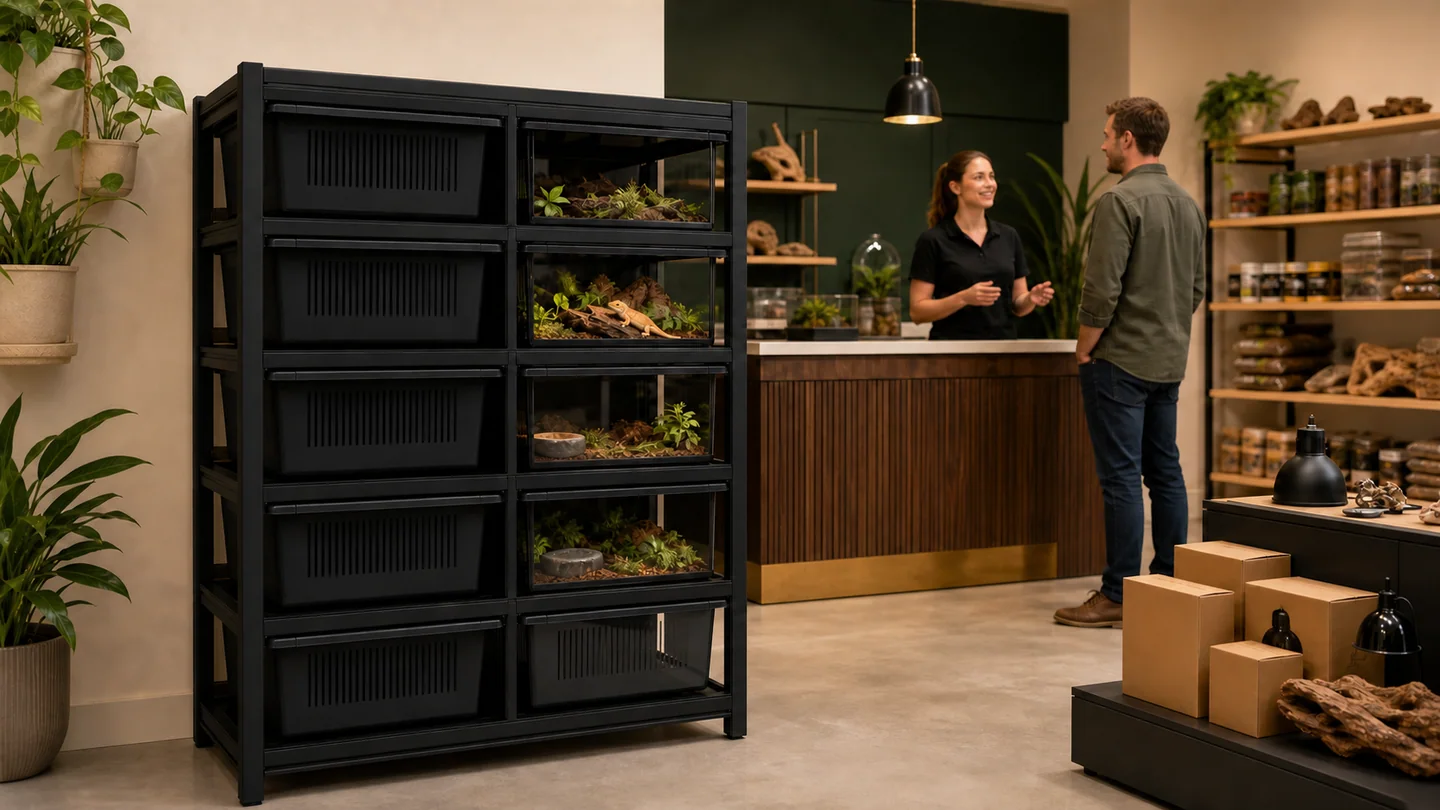
- showing frame rigidity, finish, rails, casters, and tub movement;
- explaining the difference between compact, medium, and large tub formats;
- demonstrating modular expansion and mixed configurations;
- starting a facility-planning consultation;
- supporting a special-order catalog that is broader than store inventory.
A display that tries to show every SKU becomes difficult to understand. Choose one representative system and make the comparison easy.
2. Place It in a Consultation Zone
Racks sell through explanation. Position the demonstration where a customer and staff member can stand beside it without blocking an aisle. Leave enough room to pull a tub fully, inspect the frame, and demonstrate service access safely. Keep a counter or tablet nearby for dimensions, configuration options, quotations, and lead capture.
Use clean lighting and a neutral background so the product reads clearly in customer photos and store social content. Avoid covering the rack with unrelated stock.
3. Launch a Focused Good-Better-Best Assortment
Instead of stocking every model, map products to three buying situations:
| Retail role | What the customer needs to understand | Stocking approach |
|---|---|---|
| Compact entry | Smaller footprint, modular concept, materials, basic configuration | One display or limited ready stock, with clear suitability checks |
| Facility core | Repeatable medium/large formats, heating compatibility, expansion | Display the most requested configuration; special-order adjacent sizes |
| Premium / complex | Large footprints, glass or hybrid formats, customization, OEM potential | Catalog and sample-led selling; quote per project |
Use actual enquiry data to define “good, better, best” for your region. It may reflect size, finish, heating, service package, or delivery—not a claim that one enclosure is universally suitable for a certain animal.
4. Sell the Configuration, Not Only the Frame
A serious buyer is solving a room-level problem. Train staff to ask:
- What species and individual sizes are involved?
- What usable internal dimensions and environmental features are required?
- How many animals are housed now, and what is the growth plan?
- What room dimensions, doors, power, and climate controls are available?
- Is the order for direct use, resale, or an OEM/private-label project?
- What delivery access and assembly support are needed?
The quotation should summarize assumptions and direct the buyer to confirm animal-level suitability and local requirements. This protects trust and reduces returns caused by an incomplete sales conversation.
5. Build an Accessory Path Around Real Tasks
Accessories should complete the customer workflow, not feel like random add-ons. Organize them by task:
- Temperature control: compatible heating components, thermostats, monitoring equipment, and cable management.
- Setup: suitable hides, bowls, substrate, labels, and approved furnishings.
- Operations: spare tubs, cleaning tools, replacement hardware, transport containers, and records.
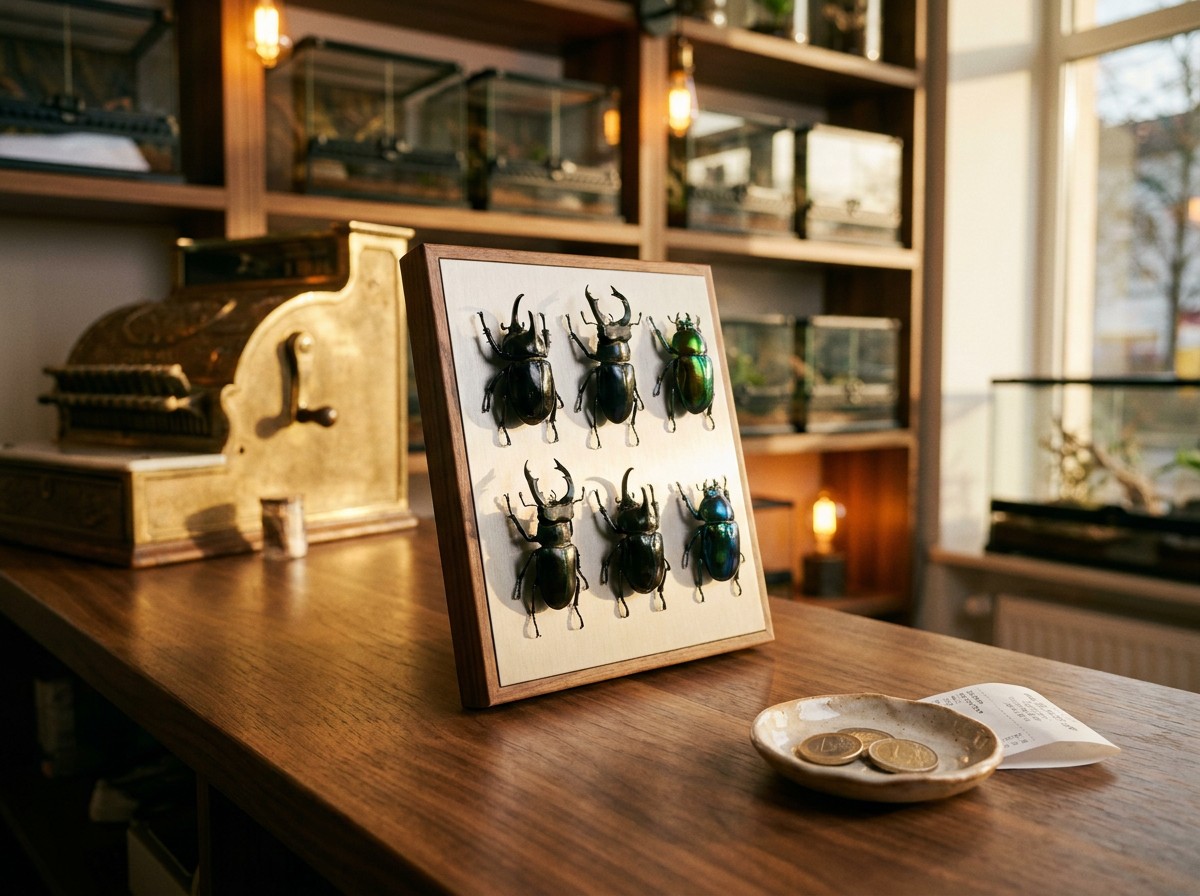
- Retail attachment: relevant collectibles or low-space counter products for customers who are not ready for a rack project.
Do not bundle a component unless compatibility and intended use are clear. The best attachment sale reduces friction for the customer after delivery.
6. Use a Wide Catalog Behind a Narrow Stock Position
Bulky products can create slow-moving inventory. Keep a small number of representative systems in store, then use a complete digital catalog for finishes, tub sizes, accessories, and project quantities. A mixed-model wholesale order can support the display plus a small ready-stock selection without forcing the retailer into one large bet.
For each special order, record deposit, expected production window, freight assumption, delivery method, assembly responsibility, and the change/cancellation policy. Clear expectations are part of the product.
7. Train Staff with a Repeatable Demo
A five-minute demonstration should cover materials, modularity, how the tub moves, ventilation, heating options, cleaning access, size selection, and next steps. It should also explain what the product does not decide: the store must still verify animal needs, local rules, and the complete environmental setup.
Give staff a comparison sheet and a short qualification form. Measure whether enquiries become accurate quotes—not just how many people touch the display.
8. Measure ROI with Contribution, Not Revenue Alone
Track the display as a small business unit. Useful metrics include:
- qualified rack enquiries per month;
- quote rate and quote-to-order conversion;
- average order value and gross margin;
- accessory attachment and repeat purchases;
- returns, damage, warranty, and staff service time;
- stock turns and months of inventory on hand;
- display area and total carrying cost.
Display contribution = gross margin from rack orders + attached-product margin − freight subsidies − returns/service cost − display depreciation − inventory carrying cost.
Review over a defined period such as a quarter. Do not promise a fixed payback before the store has local conversion and margin data.
9. Keep Welfare and Licensing Visible
Retailers are often the first source of advice for new keepers. Product selling should reinforce suitable environments, security, hygiene, competent staff, and species-specific care. Where live animals are displayed, verify enclosure size, environmental conditions, records, cleaning, and staff knowledge against the rules that apply to your business.
Make the standard visible in staff behavior and product literature. Responsible qualification may lose an unsuitable sale, but it protects animals, customers, and the retailer's reputation.
A 90-Day Retail Launch Plan
- Choose one hero configuration and define its sales job.
- Build a clear compact/core/premium assortment architecture.
- Create a comparison sheet with internal dimensions and options.
- Train staff on a five-minute demo and qualification questions.
- Connect rack orders to compatible accessories and replacement parts.
- Set special-order deposits, lead-time, delivery, and assembly policies.
- Track enquiries, quotes, conversion, margin, service cost, and stock turns.
- Review product mix after 90 days using actual customer data.
Frequently Asked Questions
Should a pet store use the same rack for live-animal housing and product demonstration?
Treat these as separate jobs. Any occupied enclosure must meet species, individual, licensing, welfare, security, and monitoring requirements. An empty demonstration can instead show tub sizes, finishes, heating options, and service access.
How many rack SKUs should a specialty retailer launch?
Start with a focused assortment that covers the main customer jobs in your market, supported by a wider special-order catalog. Expand only after reviewing enquiries, conversion, stock turns, freight, and service demand.
How should a pet store measure display ROI?
Track qualified enquiries, quotes, conversion, average order value, gross margin, accessory attachment, returns, service time, display area, and carrying cost. Compare contribution margin with total display and inventory cost over a defined period.
Retail welfare reference: UK statutory guidance for selling animals as pets. It applies to its stated jurisdiction; retailers should follow the rules and competent advice applicable to their own location.