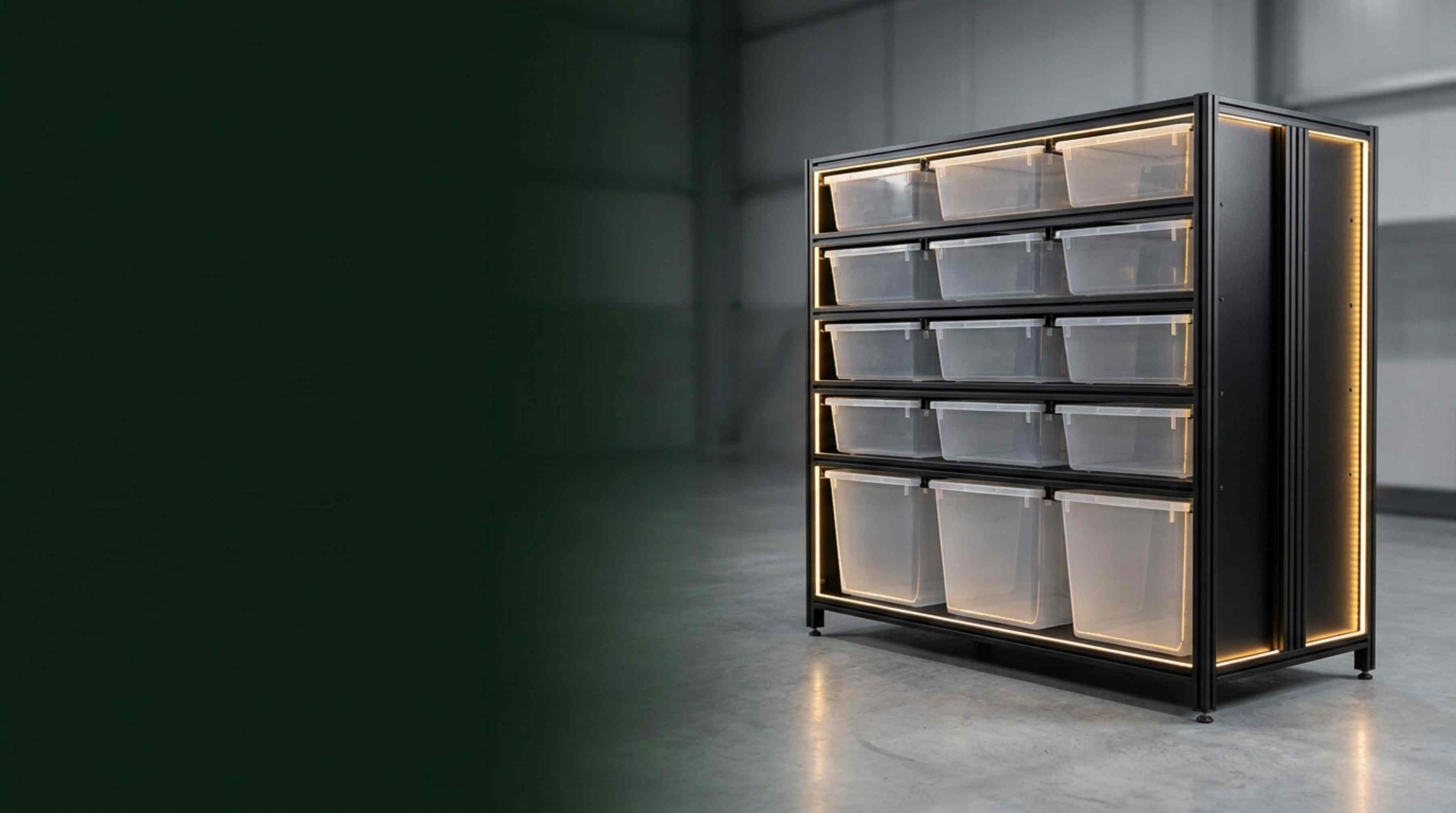
A wholesale reptile rack order combines animal housing, electrical planning, room workflow, bulky freight and after-sales risk. Buyers should compare complete configurations and written order terms—not rely on one material name, one product photo or the lowest unit price.
1. Start With the Intended Use
Record the species and individual sizes involved, required usable internal space, furnishings, ventilation, temperature gradient, room conditions, cleaning workflow and local welfare requirements. A product model is not an automatic species recommendation. Some animals may require taller, more complex or display-style enclosures.
2. Verify Tub Material and Dimensions
PET, PP, PVC and other polymers are available in different grades and manufacturing conditions. Ask for the declared material, internal and external dimensions, wall thickness, ventilation design, heat-use conditions and compatibility with the cleaning products used in your facility. Avoid universal temperature, durability or chemical-safety claims unless a product-specific document supports them.
Request a physical sample whenever possible. Evaluate the finished tub inside the intended frame with hides, water, substrate and monitoring equipment in place.
3. Review Frame Construction and Load Conditions
Ask for the declared frame material or grade, finish, hardware, assembly method, finished dimensions and recommended load conditions. Steel, aluminum-alloy and polymer systems involve different trade-offs in weight, corrosion exposure, cleaning, rigidity and price; no material is automatically best for every facility.
If the system includes caster wheels, confirm their rated load, locking method, mounting points and the floor conditions in which the rack may be moved.
4. Test Ventilation and Cleaning Access
Ventilation must be evaluated with the actual tub clearance, hole pattern, room airflow, humidity and heat source. Cleaning access should be checked with the complete configuration assembled. Confirm that tubs can be removed safely and that routine maintenance does not expose wiring or require unsupported modifications.
5. Confirm Heating and Electrical Requirements
For every heated configuration, document the component dimensions, rated wattage, voltage, frequency, plug, thermostat type, probe location, installation clearances and operating instructions. The importer should also confirm any destination-specific electrical labeling, testing or compliance requirements.
Use thermostatic control and calibrated temperature checks. A heating option that physically fits a rack is not automatically suitable for every room, species or destination market.
6. Confirm Modularity Model by Model
Modularity can reduce future replacement costs, but compatibility must be verified for the exact frame, tub, rail, heating and hardware combination. Ask the supplier to identify which parts can be changed, whether doing so affects load or ventilation, and which configurations are covered by the supplied instructions.
7. Put Commercial and After-Sales Terms in Writing
- MOQ and mix: confirm minimum quantities by model, color, package and OEM element.
- Sample and specification: record the approved sample and written acceptance criteria.
- Timing: use an order-specific production estimate and change-notification process.
- Shipping: state the Incoterm, named place, packing assumptions and import responsibilities.
- Verification: agree on photos, measurements, live review or third-party inspection before shipment.
- Claims: document the notification window, evidence required and available remedies.
- Spare parts: list included spares and how future availability will be handled.
Wholesale Buying Checklist
- ☑ The complete setup meets the intended animal and facility requirements
- ☑ Internal dimensions and material information are documented
- ☑ Frame, tub, heating and hardware compatibility is confirmed
- ☑ Electrical specifications match the destination and thermostat plan
- ☑ Sample or inspection acceptance criteria are recorded
- ☑ MOQ, customization, timing and trade terms appear on the quotation
- ☑ Packaging data and landed-cost assumptions have been reviewed
- ☑ Warranty and claims procedures are available before payment
Final Thoughts
A credible supplier should make the order easier to verify: clear legal identity, consistent specifications, practical sample or inspection options and written after-sales terms. Partner-factory names and factory-wide images may remain commercially confidential; order-level evidence is a more useful trust signal.
Stellar Start can coordinate product selection, samples, order specifications, verification and export support with specialist manufacturing partners. Final availability, minimum quantities, production estimates and after-sales terms are confirmed per order.
If you are building a multi-model commercial range, continue with our wholesale snake racks buyer checklist for assortment, pilot-order and landed-cost planning.