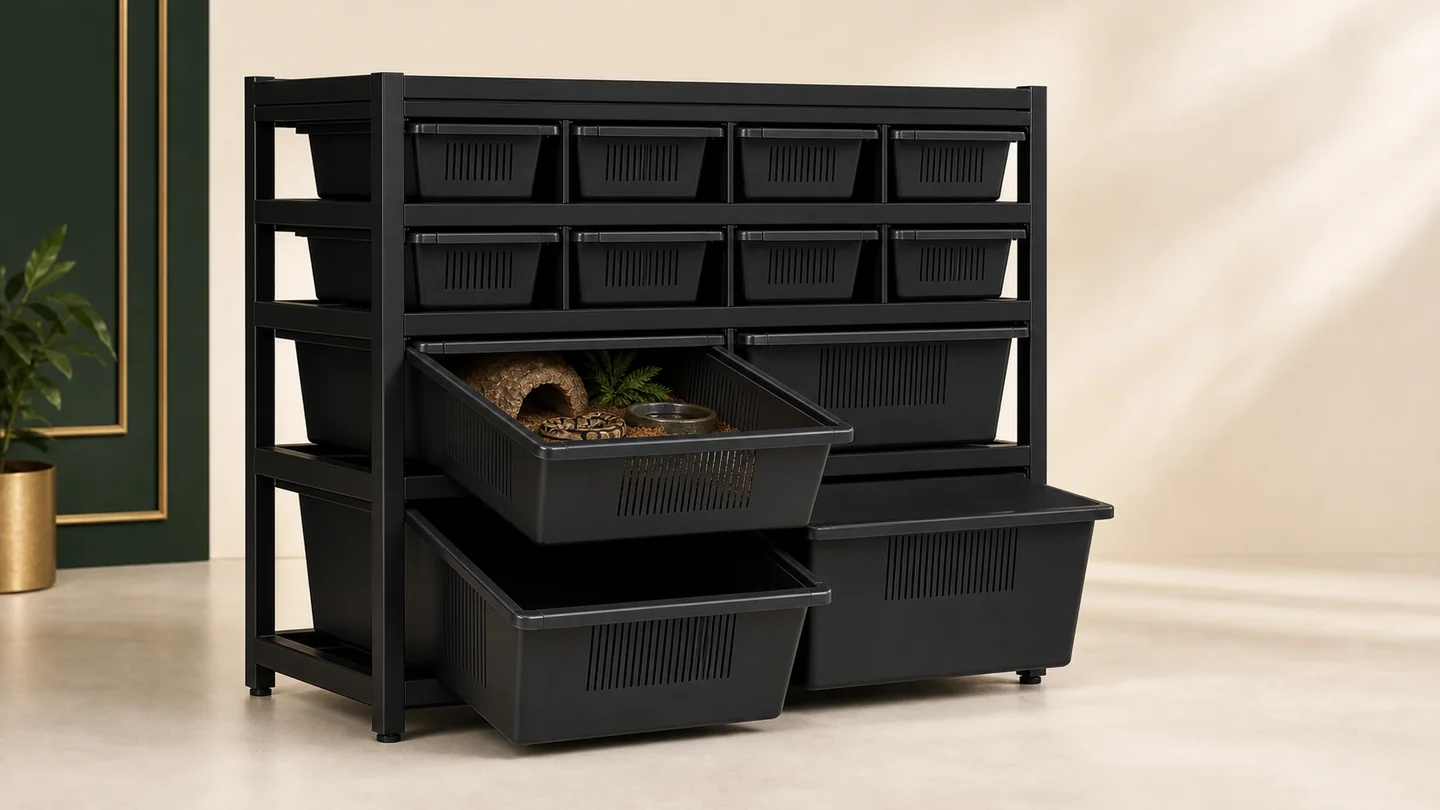
A good reptile rack cleaning SOP does more than make a room look tidy. It reduces cross-contamination, helps staff notice health changes earlier, protects heating and frame components, and creates a repeatable standard as a collection grows.
Reptiles and the equipment around them can carry microorganisms even when animals appear healthy. The U.S. Centers for Disease Control and Prevention notes that habitats, equipment, food, and tank water may be contaminated with Salmonella and other germs. For a professional breeding facility, that means hand hygiene, dedicated tools, traffic flow, and documentation belong in the same conversation as detergents and disinfectants.
1. Divide the Facility into Biosecurity Zones
Start with physical and procedural separation. A practical facility normally has at least three working zones:
- Established collection: healthy animals with known histories and stable routines.
- Quarantine or intake: new arrivals, returns, or animals awaiting health clearance.
- Isolation: animals showing clinical signs or undergoing treatment under veterinary direction.
Where possible, use separate rooms. When space is limited, separate zones with clearly marked racks, dedicated tools, and a strict order of work. Staff should move from the lowest-risk group to the highest-risk group, never in the opposite direction without changing protective items and cleaning hands and equipment.
2. Build a Daily Rack Check Before Cleaning
Cleaning begins with observation. Before pulling a tub, check the animal, water, substrate, waste, shed, ventilation openings, closure, and heat control. Record anything unusual before the environment is disturbed.
A short daily checklist can capture appetite, defecation, shed quality, visible injury, behavior, temperature alerts, and whether a full clean is required. This creates a useful health history and prevents staff from treating every tub as an identical housekeeping task.
3. Use a Safe Tub-Cleaning Sequence
A repeatable sequence reduces mistakes during busy production days:
- Prepare a secure, species-appropriate temporary holding tub.
- Move the animal using the facility's approved handling method.
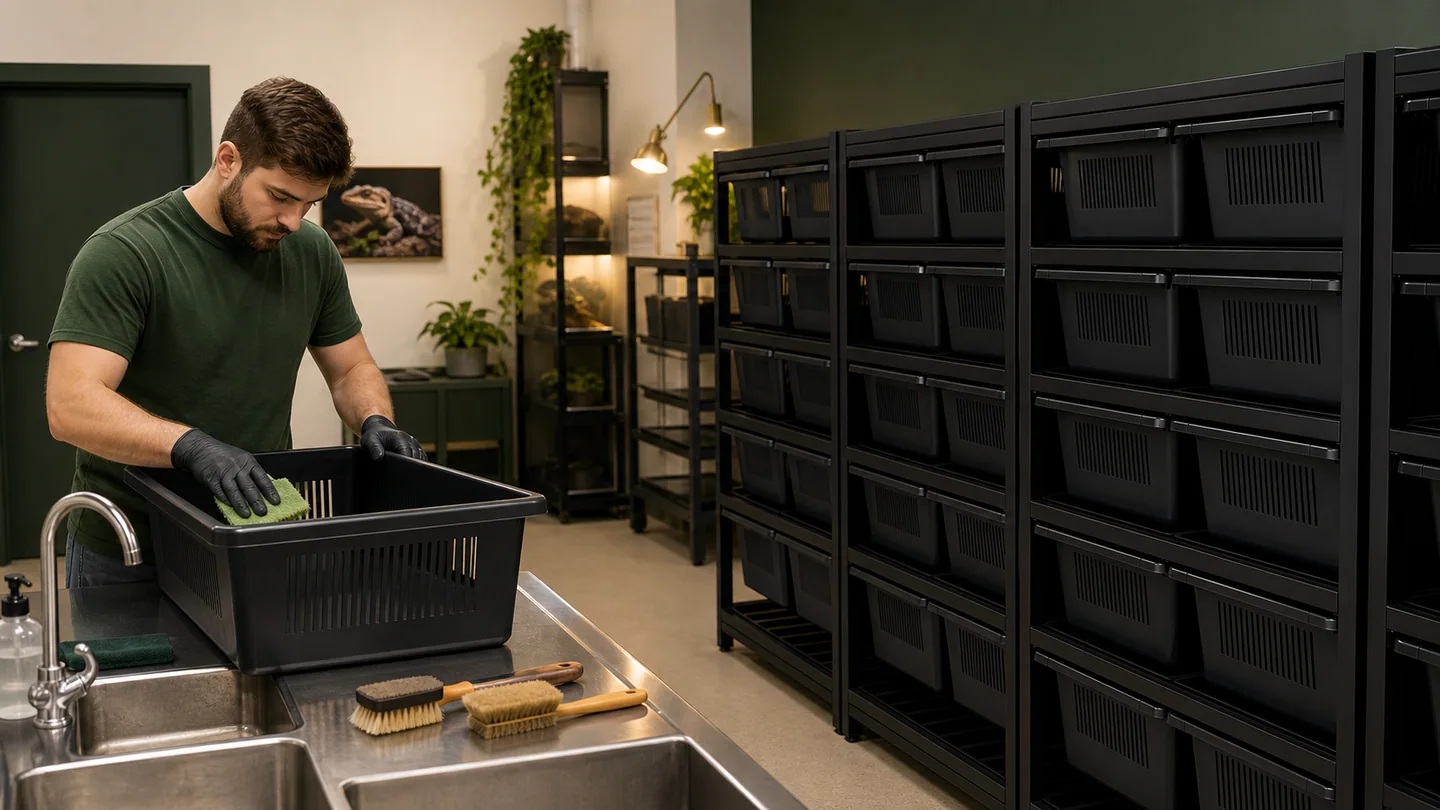
- Remove furnishings, water dishes, substrate, waste, and organic debris.
- Wash the empty tub and accessories with the approved detergent.
- Rinse if required, then apply the approved disinfectant at the label dilution.
- Keep surfaces wet for the full stated contact time.
- Rinse again when the label requires it and allow components to dry.
- Reset with clean furnishings, fresh water, and suitable substrate.
- Return the animal, confirm the closure, and update the record.
Organic material can reduce the effectiveness of many disinfectants, so washing and disinfection are separate steps. Spraying disinfectant over visible waste is not a substitute for cleaning.
4. Protect Frames, Heating Components, and Electrical Connections
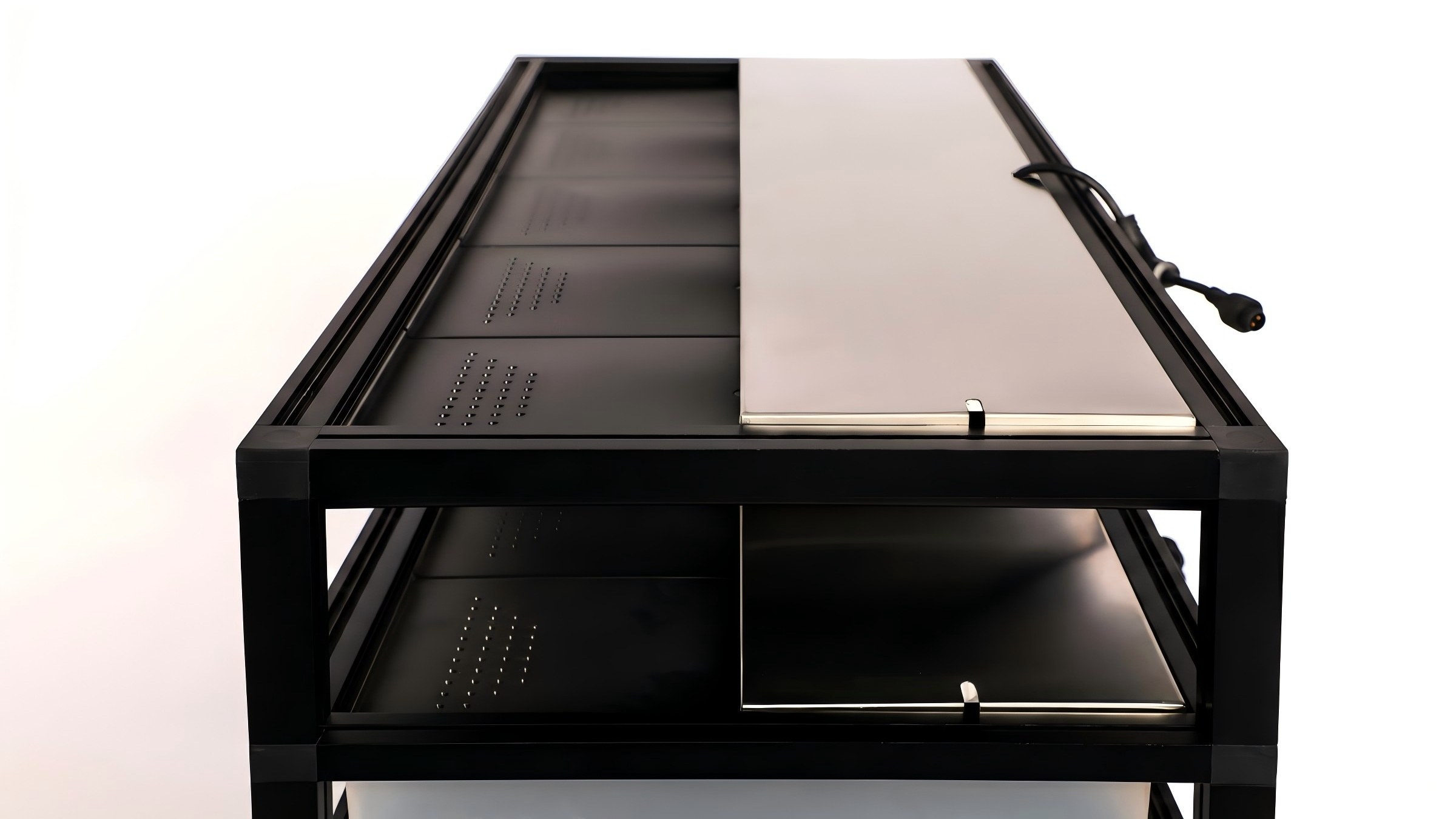
Rack frames need their own procedure. Disconnect power according to the equipment instructions before working near heating plates, wiring, plugs, or controllers. Never saturate an electrical area. Use a lightly dampened cloth for compatible frame surfaces, inspect fasteners and rails, and make sure every component is fully dry before reconnecting power.
Include a scheduled inspection for damaged cables, loose connectors, worn tub edges, blocked ventilation, bent rails, and unusual heat marks. A modular system makes individual parts easier to inspect and replace without taking an entire room offline.
5. Assign Tools by Zone
Color-coded equipment is a simple visual control. For example, one color can belong to the established collection, another to quarantine, and a third to isolation. The system can cover brushes, scrapers, buckets, tongs, transport tubs, cloths, and waste containers.
Do not move a tool out of its assigned zone unless it has completed the facility's decontamination process. Store clean tools so they remain dry and protected, and keep reptile-care equipment away from kitchens or human food preparation areas.
| Frequency | Typical task | Record |
|---|---|---|
| Every occupied tub, daily | Visual health check, water check, remove waste and spoiled food, confirm closure and airflow | Exceptions and actions |
| As required by condition | Full tub clean, furnishings and water dish, substrate replacement | Date, staff member, observations |
| Scheduled facility cycle | Frame, rails, casters, ventilation gaps, heating and controller inspection | Maintenance log |
| Between occupants | Complete cleaning and disinfection using the approved turnover protocol | Release-to-use sign-off |
6. Prevent the Most Common Workflow Failures
- One cloth for the whole room: this can move contamination from one enclosure to the next.
- No contact-time timer: wiping a product off too early may defeat the intended process.
- Unlabeled mixed solutions: staff cannot confirm concentration, preparation time, or expiry.
- Cleaning from quarantine to the main collection: traffic should flow from lower-risk to higher-risk zones.
- Returning animals to damp or strongly scented tubs: follow the label and facility release criteria before reuse.
- No written exception process: spills, suspected disease, escaped feeders, and power failures need defined responses.
7. Turn the SOP into a Staff System
A written procedure only works when staff can follow it under time pressure. Post a short version at each cleaning station, keep the detailed version in the facility manual, and train with an observed demonstration rather than a signature alone. Define who prepares solutions, who verifies concentrations, who releases cleaned equipment, and who reviews health exceptions.
Use records to improve the facility. If one rack produces repeated moisture, waste, or heat issues, the log may point to a tub-size mismatch, ventilation problem, damaged component, husbandry issue, or need for a veterinary review.
Facility-Ready Checklist
- Quarantine, isolation, and established-collection zones are defined.
- Each zone has dedicated or color-coded tools.
- Animals are moved to secure temporary housing before full cleaning.
- Detergent and disinfectant steps are documented separately.
- Label dilution, contact time, rinsing, and drying rules are visible.
- Electrical and heating components have a safe maintenance procedure.
- Daily checks, full cleans, and maintenance actions are recorded.
- Staff know how to report health concerns and process exceptions.
Frequently Asked Questions
How often should reptile rack tubs be cleaned?
Inspect occupied tubs every day and remove waste, shed, spoiled food, and soiled substrate promptly. Full-clean frequency should be based on species, substrate, occupancy, health status, and the facility's written protocol rather than one universal calendar interval.
Can a reptile stay in the tub during disinfection?
No. Move the animal to a secure temporary enclosure. Follow the product label for dilution and contact time, rinse when required, and allow the tub to dry before resetting it.
How can breeders reduce cross-contamination between racks?
Separate quarantine and established collections, work from lower-risk to higher-risk zones, use dedicated or color-coded tools, change gloves between groups, and keep cleaning and health records.
Reference: CDC — Reptiles and Amphibians: Healthy Pets, Healthy People. Consult a reptile veterinarian for protocols specific to your collection.