Every reptile keeper who crosses the line from hobbyist to serious breeder eventually faces the same structural decision: do you house your collection in stackable rack systems, or in individual standalone enclosures? For a handful of animals, either works. But the moment you start scaling — more breeding pairs, more hatchlings, more species — the choice becomes the single biggest factor in how efficiently your operation runs. This guide compares the two approaches across the five dimensions that matter when you scale.
The Core Difference
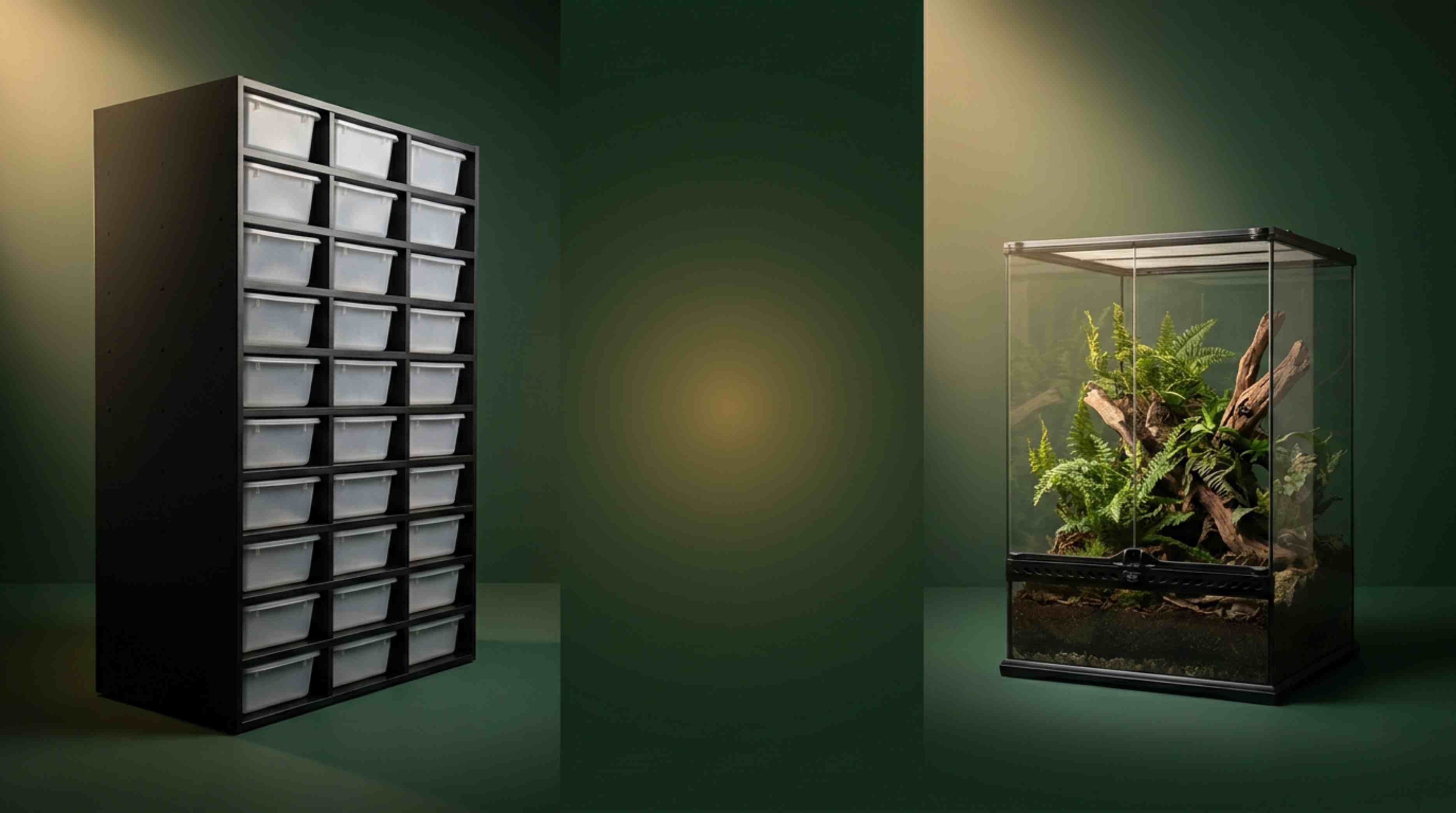
A standalone enclosure is a self-contained unit — typically a glass terrarium or a PVC cabinet — with its own lighting, heating, and ventilation. Each one is a complete habitat.
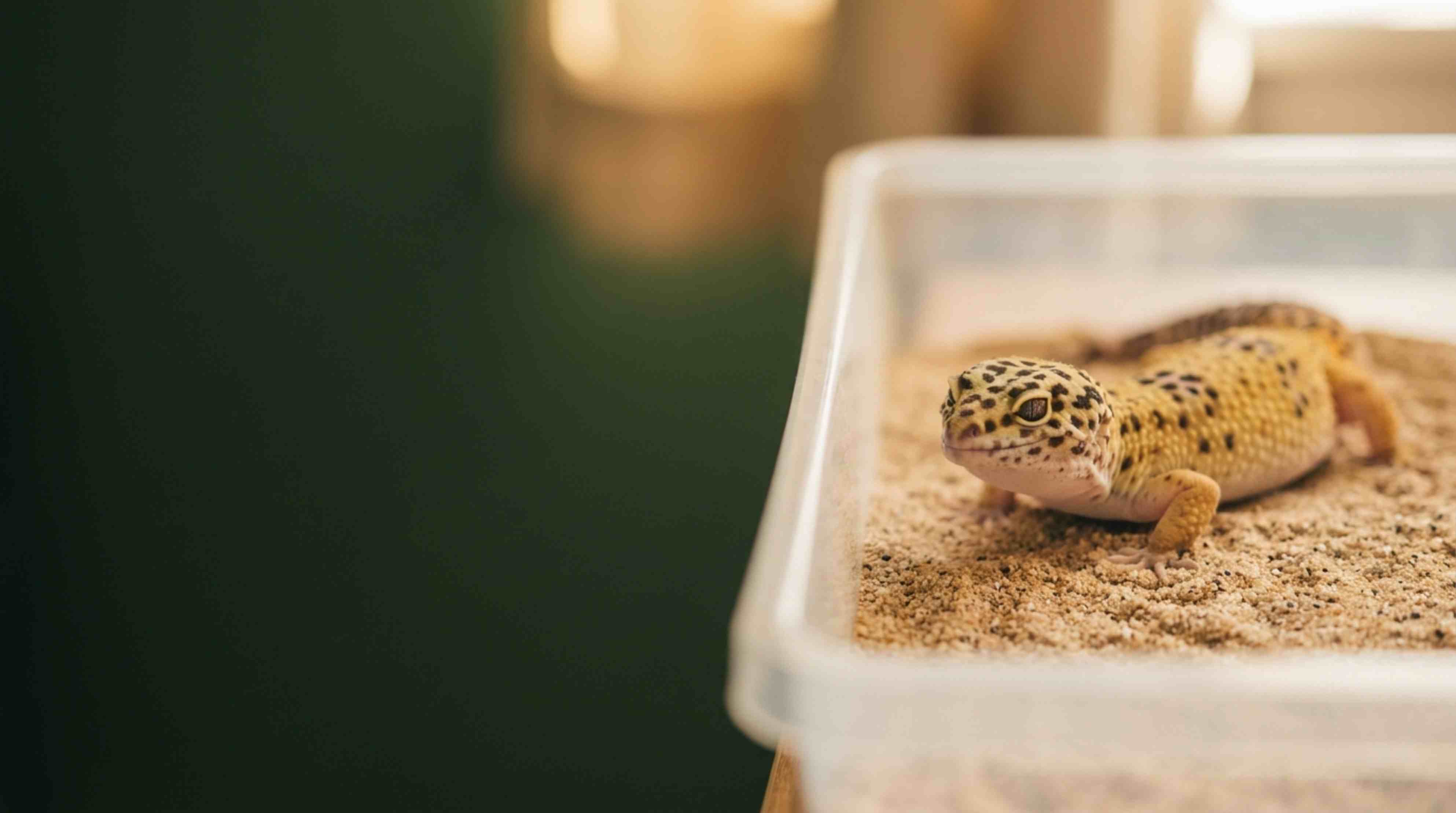
A stackable reptile rack system houses multiple animals in modular tubs within a shared frame, with centralized heating and a thermal gradient engineered across the rack. Each tub is a controlled microclimate, and the rack holds many of them in a compact vertical footprint.
The distinction sounds simple, but its consequences compound dramatically as you grow.
1. Space Efficiency
This is where rack systems win decisively at scale.
A standalone terrarium for a single ball python might occupy a footprint of 90 × 45 cm and house exactly one animal. Stack that vertically and you are limited by the structural and access constraints of glass enclosures.
A rack system uses the same floor area to house many animals in stacked tubs, with the vertical space fully utilized. For a breeder managing 20, 50, or 200 animals, the difference in floor space required is the difference between a spare room and a dedicated warehouse.
Verdict: For more than a handful of animals, racks deliver multiples more housing density per square meter.
2. Cost Per Animal
Standalone enclosures carry a high per-unit cost — each one needs its own glass, its own heat source, its own thermostat, its own lighting. Multiply that across a growing collection and the capital cost becomes prohibitive.
Rack systems amortize infrastructure across many animals. One heating system, one thermostat, and one frame serve an entire column of tubs. The cost per animal housed drops substantially as the rack fills.
Verdict: Racks have a higher entry cost for the frame but a far lower marginal cost per additional animal — exactly the economics you want when scaling.
3. Climate Control
This is the dimension breeders most often underestimate.
With standalone enclosures, every unit is a separate climate-control project. Twenty enclosures means twenty thermostats to monitor, twenty gradients to verify, twenty potential points of failure.
A rack system centralizes climate control. A single engineered thermal gradient runs across the rack, managed by one thermostat with a probe on the warm side. You monitor one system instead of twenty. For breeding, where precise and consistent temperatures drive ovulation and incubation success, this centralization is a significant operational advantage — provided the rack is well-designed with proper ventilation and matched heating.
Verdict: Racks simplify climate management at scale; standalone enclosures multiply the monitoring burden.
4. Daily Labor
Consider the daily reality of husbandry — feeding, watering, spot-cleaning, health checks.
With standalone enclosures spread around a room, each check means walking to a separate unit, often opening a front-hinged door and reaching in. The labor scales linearly with animal count.
With a rack system, tubs slide out like drawers in an organized column. Checks, feeding, and cleaning happen in a compact, ergonomic workflow. A breeder can service a full rack column far faster than the equivalent number of scattered enclosures.
Verdict: Racks dramatically reduce the labor-hours per animal, which is the hidden cost that determines whether a growing operation stays manageable.
5. Expansion Economics
The final consideration is how each approach handles growth.
Expanding standalone enclosures means buying complete new units every time — full habitats with all their components.
Expanding a modular rack system can mean simply adding tubs to existing frames, or adding frames that share the same tub stock and heating components you already use. The incremental cost of housing one more animal is just the tub, not an entire habitat.
A modular system also lets you reconfigure — swap tub sizes for different species, add vented tubs for summer, or expand vertically — without replacing what you already own.
Verdict: Racks scale incrementally and cheaply; standalone enclosures scale in expensive whole-unit increments.
When Standalone Enclosures Still Make Sense
To be fair, standalone enclosures have legitimate uses even for serious keepers:
- Display animals — a showcase specimen in a planted naturalistic terrarium, where the enclosure itself is part of the presentation
- Arboreal species with specialized needs that benefit from tall, custom-configured habitats
- Retail display in a shop, where customers want to see animals in attractive setups
- Single prized animals kept as pets rather than as part of a breeding operation
The point is not that racks are universally superior — it is that for scaling a breeding operation, the economics and labor strongly favor stackable systems.
Making the Decision
If your collection is small and likely to stay small, or if presentation matters more than density, standalone enclosures may suit you. But if you are building toward a serious breeding operation — more pairs, more hatchlings, more species, and a need to manage it all efficiently — a modular stackable rack system is the foundation that will let you grow without your space, costs, and labor spiraling out of control.
The breeders who scale successfully almost universally build on rack systems, precisely because every dimension that matters at scale — space, cost per animal, climate control, labor, and expansion — favors the stackable approach.
If you are planning the foundation for a growing operation and want to discuss which rack configuration fits your target species and growth plans, our team is happy to help. Reach out via the contact form or WhatsApp for a wholesale consultation.