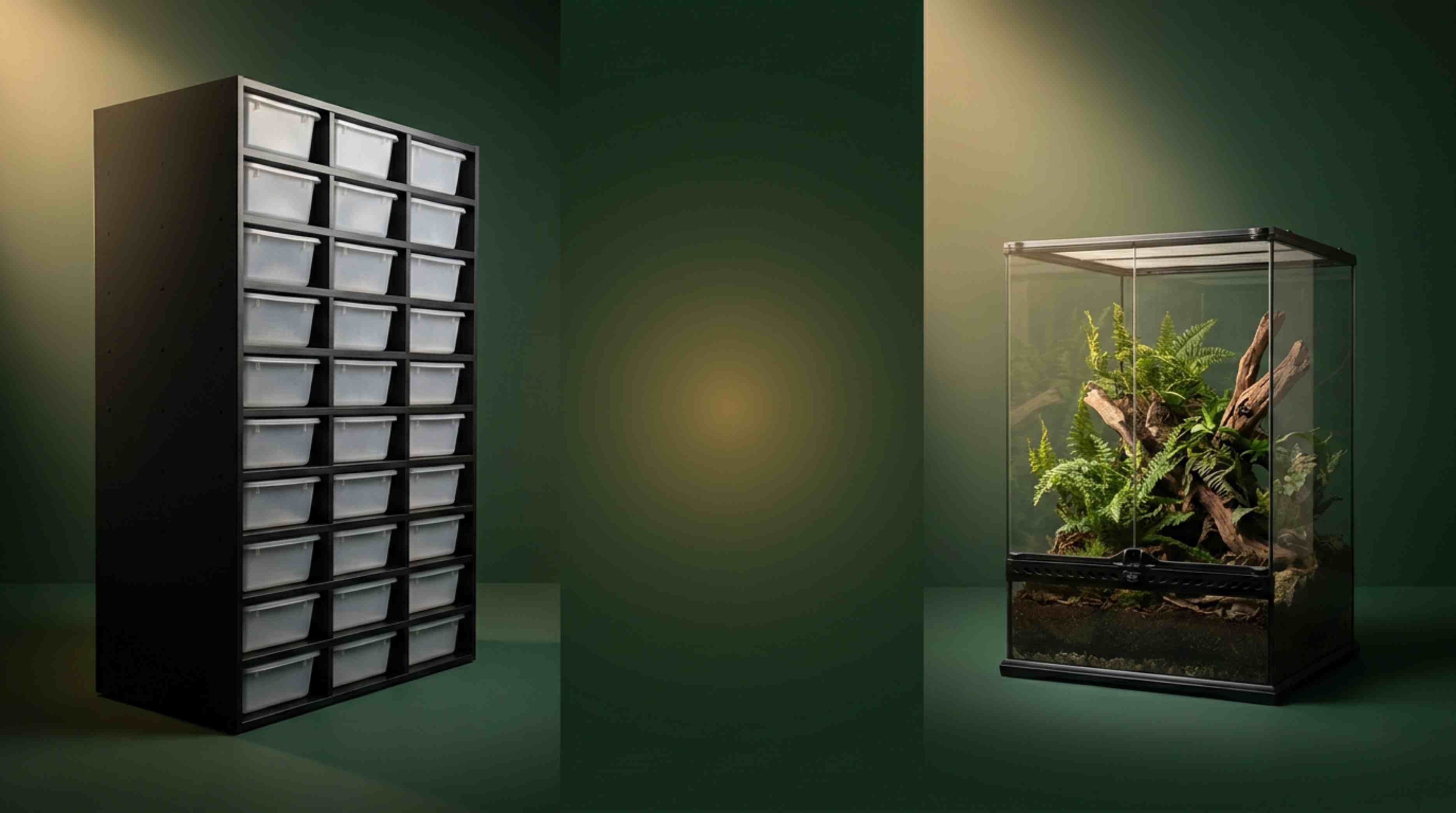
Leopard geckos (Eublepharis macularius) are among the most beginner-friendly and widely bred reptiles in the world — and they are exceptionally well-suited to rack system housing. Their modest size, terrestrial habits, and tolerance for simple setups make them a natural fit for stackable tubs, which is why nearly every commercial leopard gecko breeder uses rack systems rather than individual terrariums. This 2026 guide covers everything you need to know to house and breed leopard geckos in racks: tub sizing, temperature setup, substrate, and the configurations that work best.
Why Leopard Geckos Thrive in Rack Systems
Leopard geckos are terrestrial, meaning they spend their lives on the ground rather than climbing. This is the single biggest reason they suit rack systems so well — they do not need tall, vertically oriented enclosures. A shallow, horizontally spacious tub gives them everything they need: floor space to roam, a warm zone, a cool zone, and hides.
They are also relatively small (typically 18–25 cm as adults), tolerate being housed individually, and do not require UVB-dependent setups the way some diurnal species do. All of this makes them ideal candidates for the controlled, space-efficient environment of a rack system.
Ideal Tub Sizing for Leopard Geckos
Tub size depends on the life stage:
Hatchlings and juveniles can be started in smaller tubs that make it easy for them to find food and feel secure. A tub footprint in the range typically used for small-format racks works well — large enough to establish a gradient, small enough that the animal does not feel exposed.
Adult leopard geckos do well in a tub providing roughly 30 × 40 cm or more of floor space, with enough room for a warm hide, a cool hide, a moist hide for shedding, a water dish, and open floor for movement. Depth does not need to be tall — leopard geckos are not climbers — but the tub must be tall enough to prevent escape and to allow a few centimeters of substrate.
Breeding females benefit from slightly more space and a dedicated moist hide / lay box, since they will deposit eggs there. Many breeders use a medium-format tub for breeding adults to accommodate the lay box comfortably.
The key principle: prioritize floor area over height. A rack system that accepts shallow, wide tubs is ideal for leopard geckos, which is why modular systems offering multiple tub-size options are so valuable — you can match tub dimensions to life stage.
Temperature Gradient Setup
Leopard geckos are ectothermic and thermoregulate by moving between warm and cool zones. Your rack heating should create a clear gradient within each tub:
- Warm side: 88–92°F (31–33°C) on the floor surface above the heating element
- Cool side: 70–75°F (21–24°C) at the opposite end of the tub
- Night temperatures: a modest drop is acceptable and even beneficial; leopard geckos tolerate cooler nights well
Because leopard geckos absorb heat through their bellies (belly heat aids digestion), under-tub or back-mounted heating that warms the floor is ideal — exactly what a well-designed rack system with matched heating plates provides. Always verify the warm-side floor temperature with a digital probe thermometer rather than trusting a dial gauge, and always run the heating through a quality thermostat to prevent overheating.
A pulse proportional thermostat with the probe placed on the warm-side floor of a representative tub is the professional standard for leopard gecko racks.
Substrate Choices
Substrate for leopard geckos in racks should prioritize safety and ease of cleaning:
- Paper towel or newspaper — the breeder standard. Cheap, hygienic, easy to spot-clean, and eliminates any risk of impaction. Most commercial operations use this.
- Reptile-safe textured liners — reusable and easy to clean, a step up in appearance from paper.
- Avoid loose particulate substrates for hatchlings and juveniles, which carry impaction risk if ingested during feeding.
For breeding females, provide a moist hide with damp substrate (such as damp paper towel or sphagnum moss) that serves as both a shedding aid and a lay box.
Rack Configuration for Leopard Gecko Operations
For a leopard gecko breeding operation, the ideal rack configuration typically includes:
- Shallow, wide tubs matched to the species' terrestrial habits
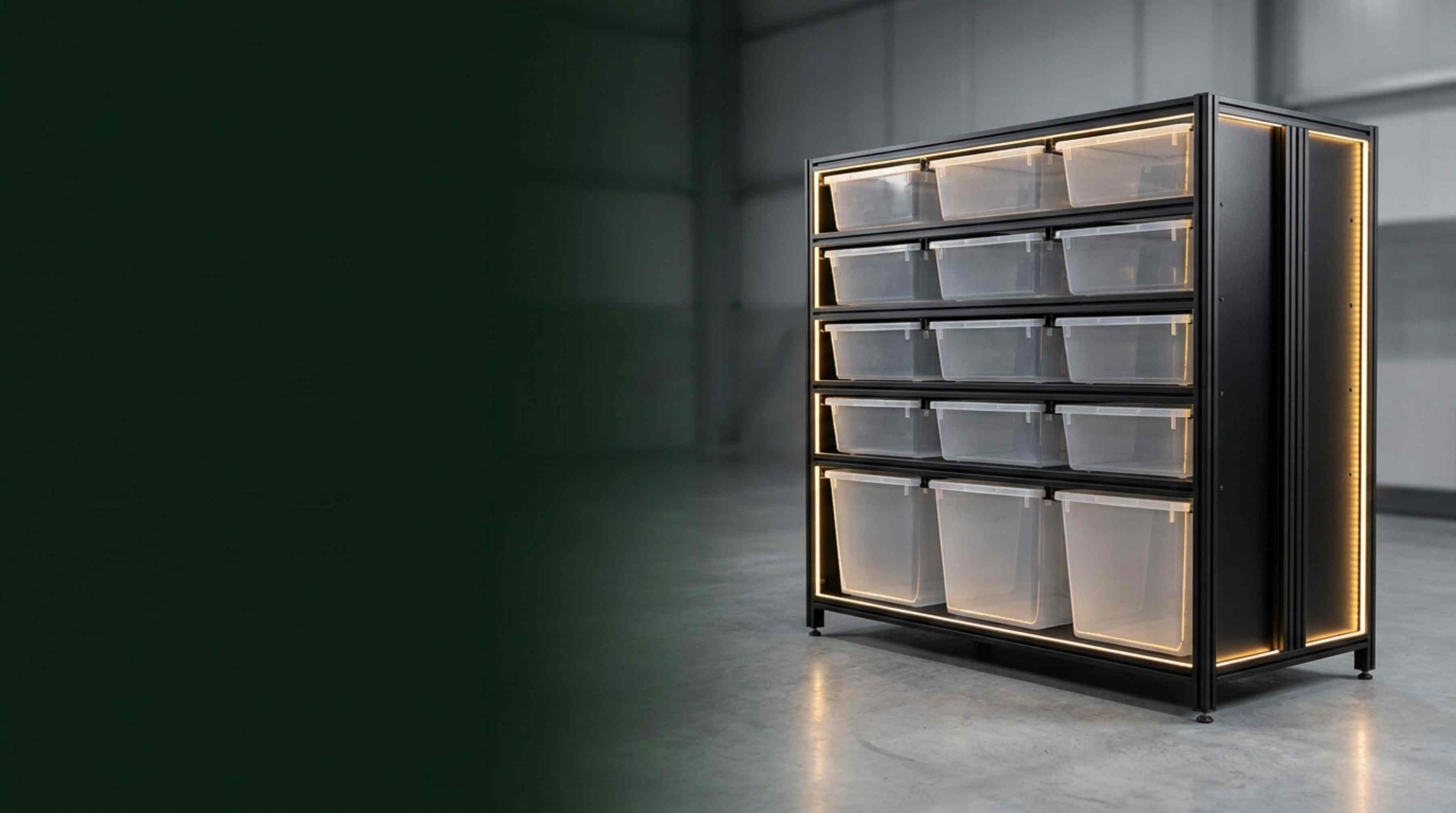
- Multiple tub sizes in the system — smaller for hatchlings, larger for breeding adults — so a single frame investment serves all life stages
- Matched belly-heat plates providing the floor warmth leopard geckos need for digestion
- Good ventilation to maintain the relatively dry conditions leopard geckos prefer (they need lower humidity than tropical species)
- PET tubs that stay clear for daily health checks and tolerate cleaning without clouding
The ability to mix tub sizes within one frame is especially valuable for leopard geckos because the species moves through distinct life stages — and a modular rack lets you reconfigure as hatchlings grow into breeding adults.
Husbandry Workflow
One of the great advantages of housing leopard geckos in racks is the efficiency of daily care. With tubs sliding out like drawers, a breeder can:
- Check each animal's condition at a glance through clear PET tubs
- Spot-clean and refresh water quickly across a column
- Feed efficiently during evening hours when leopard geckos are active
- Monitor breeding females and check lay boxes without disturbing the whole setup
This drawer-style workflow is why commercial leopard gecko breeders can manage large collections that would be impractical in scattered standalone enclosures.
Common Mistakes to Avoid
- Tubs too tall, too little floor space — leopard geckos want horizontal room, not vertical height
- No thermal gradient — the whole tub at one temperature defeats the purpose; always create warm and cool zones
- Skipping the moist hide — essential for clean sheds and for breeding females
- Humidity too high — leopard geckos are arid-adapted; over-humid racks invite respiratory and skin problems
- No thermostat — never run rack heating without one; a failure can be fatal
- Loose substrate with young animals — impaction risk during feeding
Final Thoughts
Leopard geckos and rack systems are a natural match. Their terrestrial habits, modest size, arid preferences, and tolerance for simple setups make them ideal for stackable tub housing — which is exactly why nearly every serious leopard gecko breeder builds on rack systems. The keys to success are matching tub size to life stage, establishing a proper belly-heat gradient under thermostat control, keeping humidity moderate, and choosing a modular system that lets you reconfigure as your animals grow.
If you are setting up or expanding a leopard gecko operation and want to discuss the right rack configuration, tub sizing, and matched heating for your facility, our team is happy to help. Reach out via the contact form or WhatsApp for a wholesale consultation.